
Stay up-to-date with the
Product Reports

SHACMAN heavy-duty trucks — including tractors, dump trucks, and cargo vehicles — are widely used in construction, mining, and cross-country long-distance transportation across Africa, Southeast Asia, and the Middle East. Unlike light passenger vehicles, SHACMAN trucks are equipped with multi-speed manual transmissions, full air brake systems, and high-torque Weichai diesel engines. Improper operation can lead to clutch burning, brake overheating, excessive fuel consumption, and traffic accidents.
This comprehensive guide covers all core driving operations for new SHACMAN operators, from pre-drive inspection to advanced driving techniques.

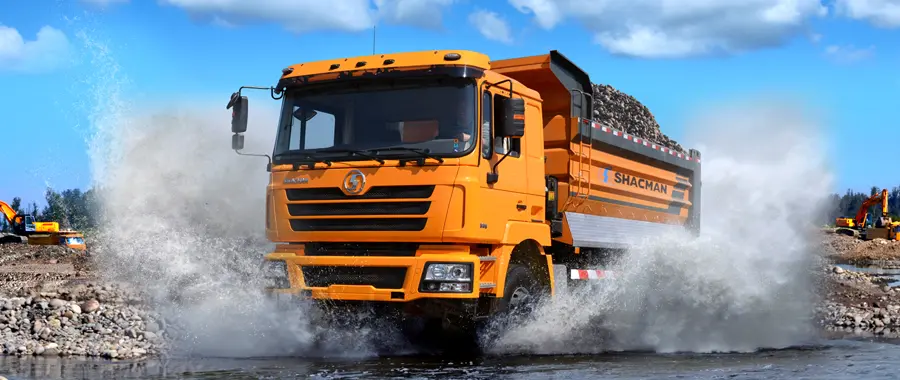
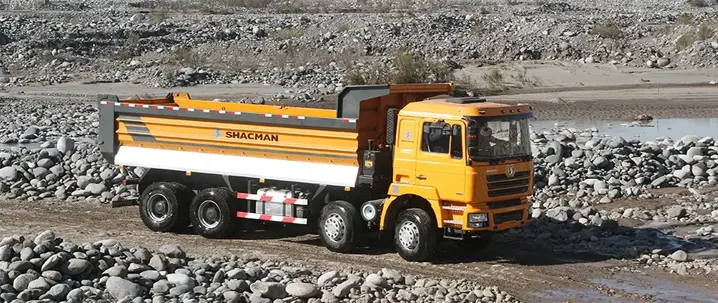
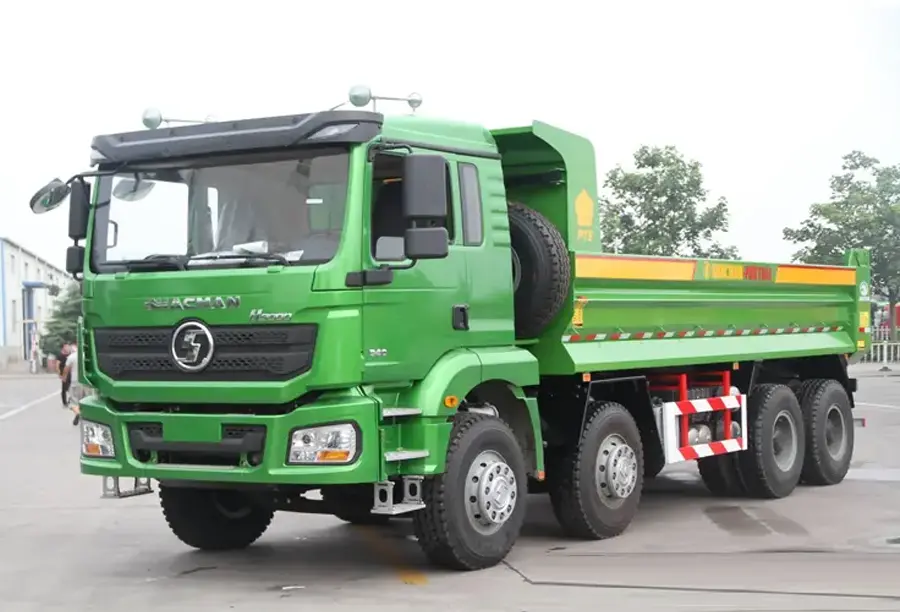
Shacman F3000 8×4 Dump Truck
Complete a full walkaround and cabin check before every departure.
| nspection Item | What to Check |
| Tires | Inspect tire pressure, remove embedded stones and nails. Check wheel nuts for looseness and tire sidewall cracks. |
| Leakage | Check for oil, coolant, or air leaks under the engine, gearbox, and axles. |
| Vehicle Body | For dump trucks, ensure the cargo box is fully locked down. For tractor units, double-check kingpin connection with trailers. |
| Lights & Mirrors | Verify headlights, turn signals, brake lights, and rearview mirrors work clearly. |
| Brake Fluid | Check brake fluid level in the main pump reservoir — should be between “MAX” and “MIN” marks. |
| Engine Oil | Check engine oil quantity using the dipstick. |
| Coolant | Check coolant level in the expansion tank. |
| Fuel | Check fuel quantity via the fuel gauge. |
| Air Filter | Check and clean the dust collection cup, especially in dusty conditions. |
Adjust the air suspension seat, steering wheel, and mirrors to eliminate blind spots. Fasten your safety belt tightly. Turn the ignition to ON without starting the engine, and wait for the dashboard self-test to finish.
Critical: SHACMAN air brakes require 6–8 bar air pressure. Do not release the parking brake until the pressure reaches the standard value. Test the exhaust brake, wipers, and hazard lights for normal function before departure.
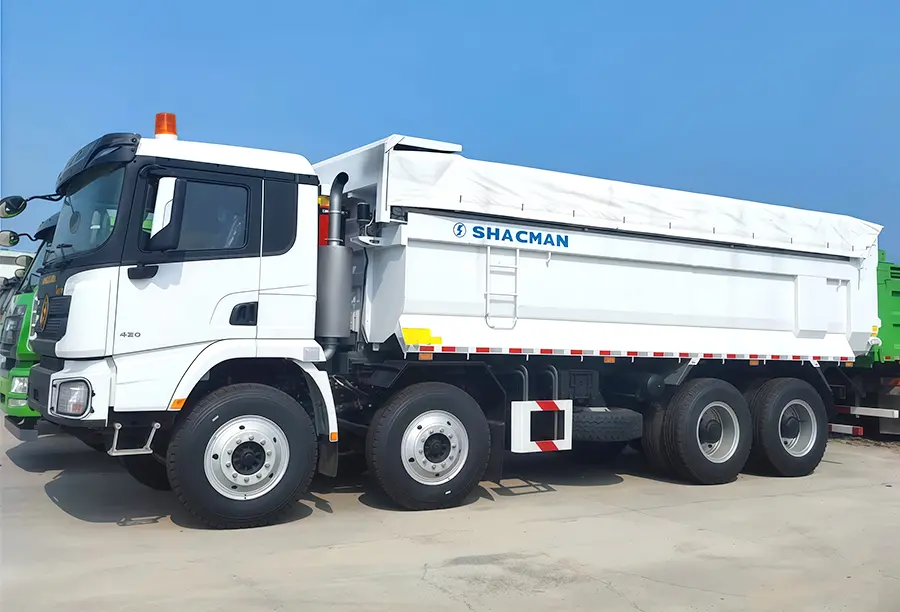
Shacman X3000 8X4 Dump Truck With Tarpaulin
Most SHACMAN trucks are fitted with WP10, WP12, or WP13 diesel engines.
Press the clutch fully, shift into neutral, and pull up the parking brake
Turn the key to start the engine — release the key immediately after ignition
Do not crank the starter for over 10 seconds continuously
Avoid heavy throttle when the engine is cold
Normal temperatures: Idle for 2–3 minutes to warm up the engine
Cold weather (below 10°C): Activate the preheat button for 10–30 seconds before cranking. Idle for 5 minutes and drive slowly within the first 5 kilometers
In winter conditions, choose low-grade diesel fuel suitable for the local temperature–. Cold starts require longer preheating — it is generally recommended that the idle heat engine time is about 15 minutes.
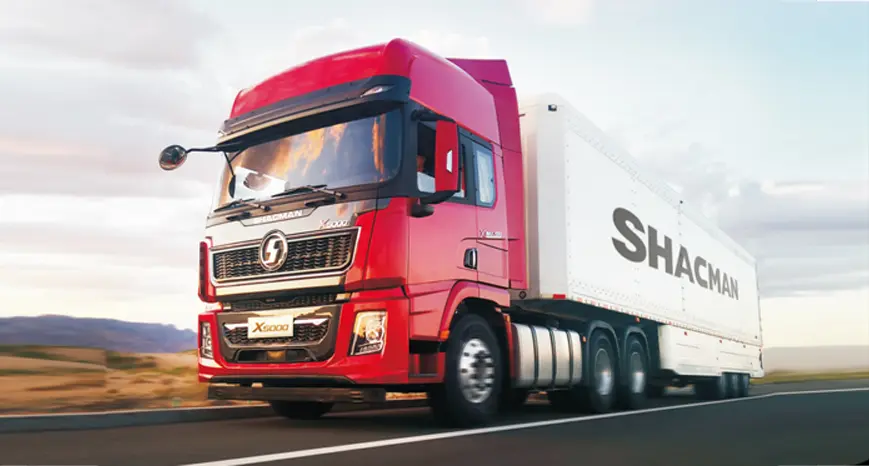
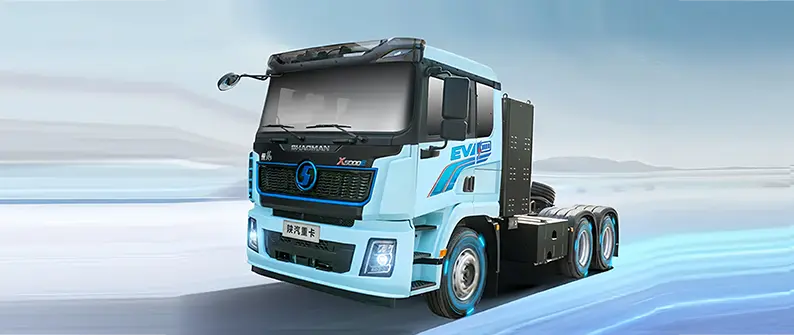
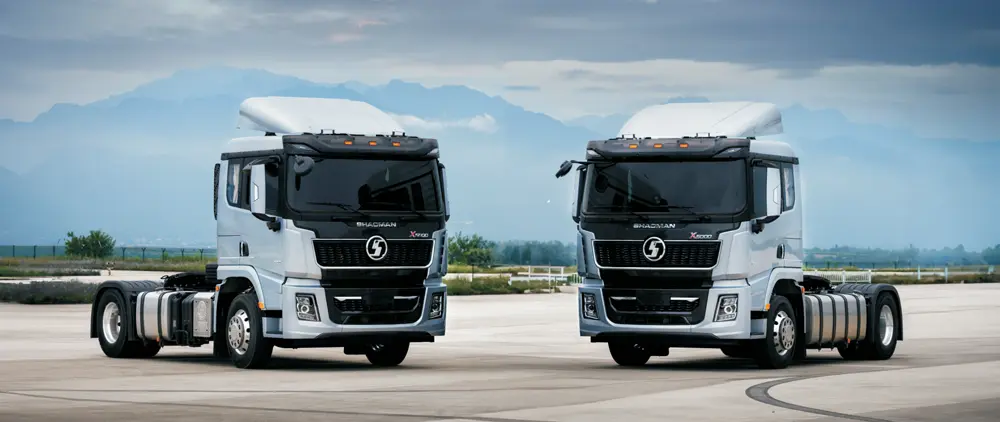
Shacman-X5000-Trucks-home
Nearly all standard SHACMAN trucks use Fast 12-speed gearboxes with Low (L) and High (H) ranges on the gear lever knob.
| Range | Gears | Use Case |
| L (Low) | 1–6 | Starting, climbing hills, and heavy loads-1 |
| H (High) | 7–12 | Flat highway cruising |
Core Rule: Switch L/H range only when the truck is in neutral gear

Upshift within the same range:
Depress clutch, shift to neutral
Release clutch fully
Press clutch again and engage the higher gear
Cross-range shift (6 to 7):
Shift to neutral
Toggle from L to H
Complete double-clutch shifting
Downshift on slopes:
Reduce vehicle speed first
Shift to neutral
Switch range and downshift with double clutch
Maintain engine RPM between 1200–1800 for optimal power and fuel economy. Never force gear shifting when speed does not match.
For upshifting, accelerate to the desired RPM — usually between 1,500 and 1,800 — then pull the shifter into neutral
Practice double-clutching by pushing in the clutch pedal and moving the shifter to etch the foot and hand movements into your memory
Practice revving up the engine while in neutral to get a feel for what different RPMs sound like–
SHACMAN relies on four braking systems for safety: traveling brake (footbrake), auxiliary brake (exhaust brake), emergency and parking brake (manual brake), and trailer brake (optional device).
The daily deceleration tool with standard ABS on X3000 and M3000 models. The maximum working pressure is 1MPa, with the first circuit acting on the rear axle wheels and the second on the front axle wheels.
⚠️ Warning: If one of the two circuits drops below 0.55 MPa (5.5 bar), the air cylinder pressure indicator light will turn on. Park immediately and find the cause of the pressure leak.
Critical: Avoid hard braking during cornering to prevent rollover or trailer jackknife.

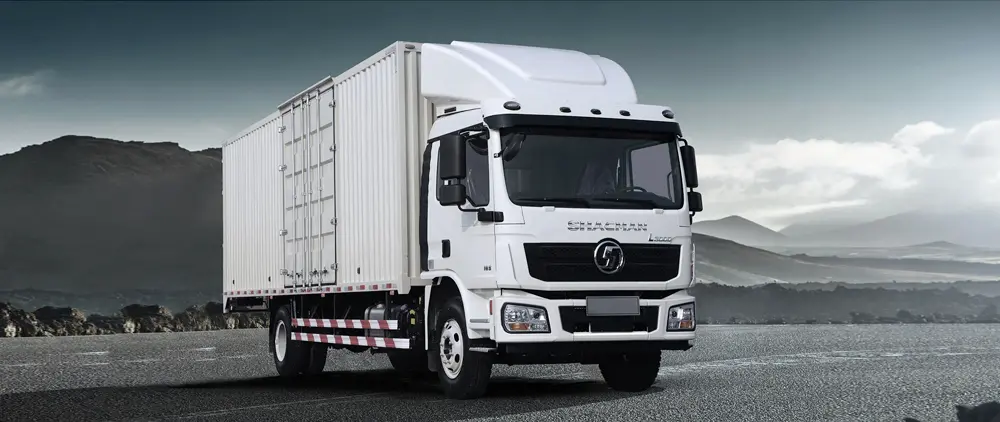
When driving down a long slope, you must use the exhaust brake. The auxiliary brake is controlled by a button valve mounted o/models/shacman-l3000/n the floor in the left diagonal front of the driver in the cab.
Key advantages:
Reduces usage frequency of the master brake
Reduces abrasion and heat of tires and wheels
Extends service life and reduces fuel consumption
Improves driving safety
Precautions for exhaust brake use:
Engine revolution speed shall not be greater than 2000 r/m
Efficiency is higher when the transmission is in low gear
Never travel in neutral gear — there is no auxiliary brake effect
Pressing the clutch or accelerator will cause the exhaust brake to fail
In rain, snow, or slippery conditions, use exhaust brakes with caution to avoid side-slipping
The manual brake locks rear wheels for parking–1. The spring brake can be released only if the brake system pressure reaches 0.55MPa (5.5 bars) and the manual brake signal light goes out.
⚠️ Important: Prior to starting the engine, the manual brake valve handle must be in the brake position.
On long descents, use engine braking (lower gears) as your primary method to give your brakes a break–. Make full use of the retarder for smooth deceleration.
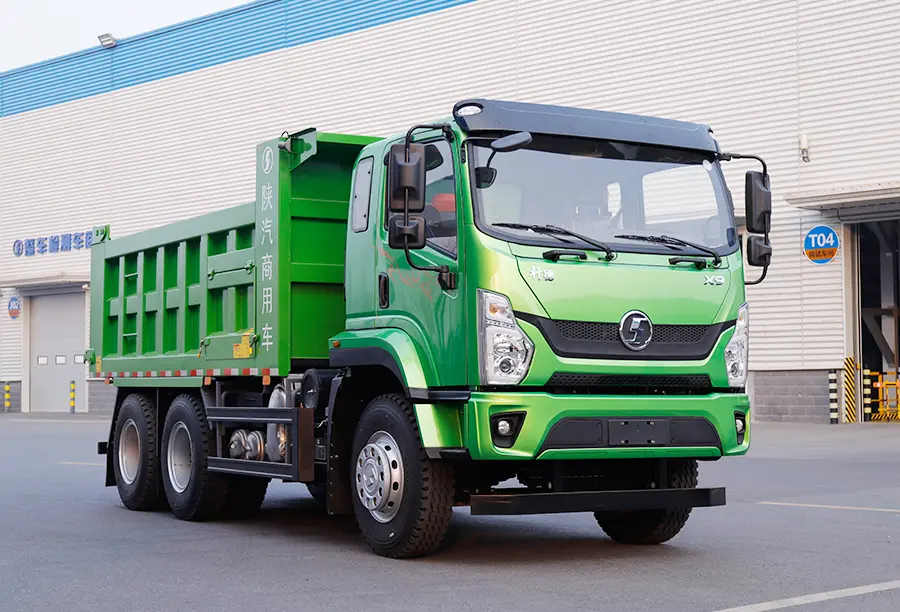
SHACMAN X9 DUMP TRUCK
On long downhill and turning sections, drivers should test the brakes in advance and strictly control speed–. Avoid riding brakes downhill — use engine braking (lower gears) as your primary method on long descents.
When the rainy season arrives, complex road conditions and slippery surfaces pose numerous challenges
Rainy day driving tips:
Reduce speed by 20–30% in rain or snow, and increase following distance
When turning, slow down in advance and utilize vehicle stability control
Proceed slowly and at a constant speed only when water depth is less than half the height of the tires to prevent water from entering the engine air intake
Keep your vision clear at all times and maintain distance between vehicles
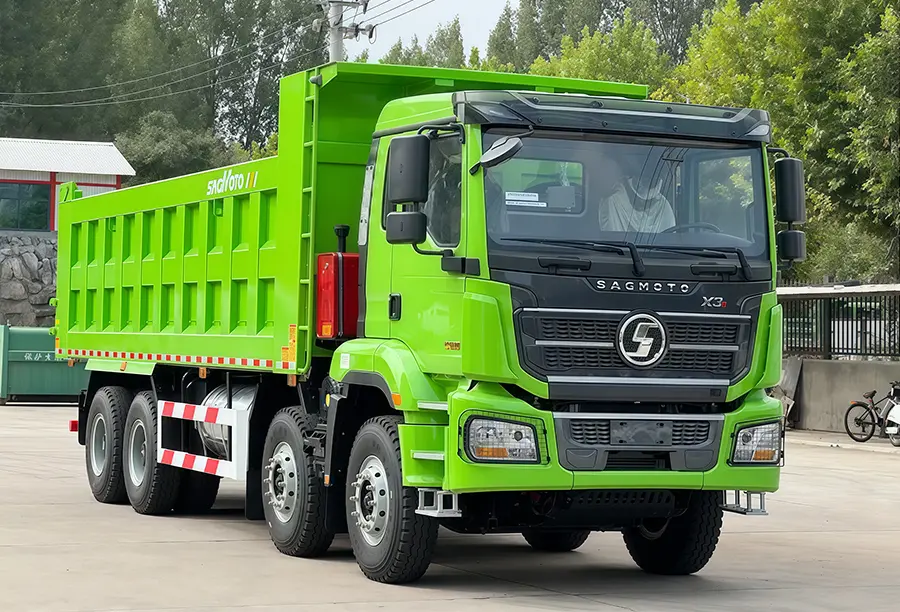
SHACMAN X3S 8×4 DUMP TRUCK
Winter operation requires special attention:
Fully heat the engine after cold start
Keep an eye on your oil pressure gauge while driving
Pay meticulous attention to brakes, AC, and engine oil
In ice and snow or mud roads, the exhaust brake can be used to reduce sideslip
Maintain following distance at least 2–3 times that under normal circumstances
The SHACMAN Tractor Truck run-in mileage is specified as 2000–4000 km
Engine speed: In the initial 3000 km, the engine speed should not exceed 70% of the rated speed–
Avoid full throttle and emergency brakes — full throttle starts will lead to clutch damage or uneven tire wear
Do not overload — exceeding weight limits strains the engine, brakes, and suspension
No high-speed driving — generally, speed should be controlled within 60–80 km/h during break-in
Use all gears — run each gear during the break-in period–
After the running-in period expires, the limiting stopper on the injection pump should be removed
Idle the engine for 3–5 minutes before shutdown to allow the turbocharger to cool down
Turn off the warm air first
After stopping, ensure the power takeoff is disengaged promptly for dump trucks
For dump trucks, clean up residual materials promptly after unloading to prevent corrosion of the compartment body
SHACMAN identifies these top mistakes operators make:
| Mistake | Consequence | Prevention |
| Overloading | Strains engine, brakes, suspension; increases breakdown risk | Adhere to manufacturer’s recommended load capacity |
| Neglecting maintenance | Brake failure, tire blowouts, engine damage | Follow scheduled maintenance schedule |
| Improper load distribution | Instability at high speeds or on curves | Balance weight distribution properly |
| Ignoring weather conditions | Accidents in rain or snow | Reduce speed by 20–30% in adverse weather |
| Skipping pre-trip inspection | 90% of roadside emergencies are preventable | Complete 10-minute pre-trip inspection |
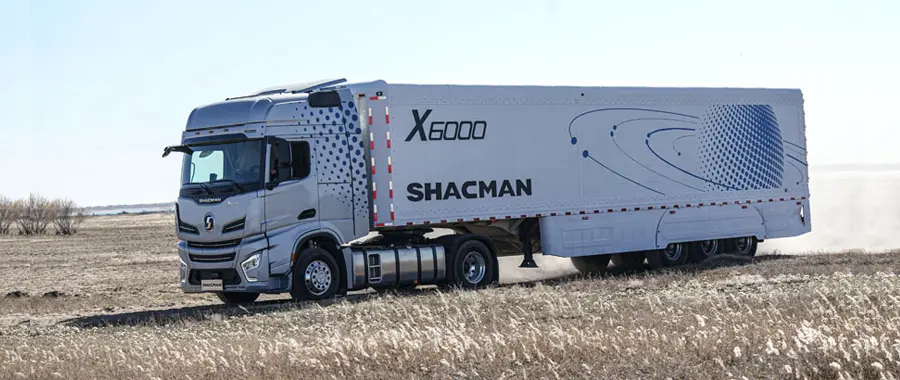
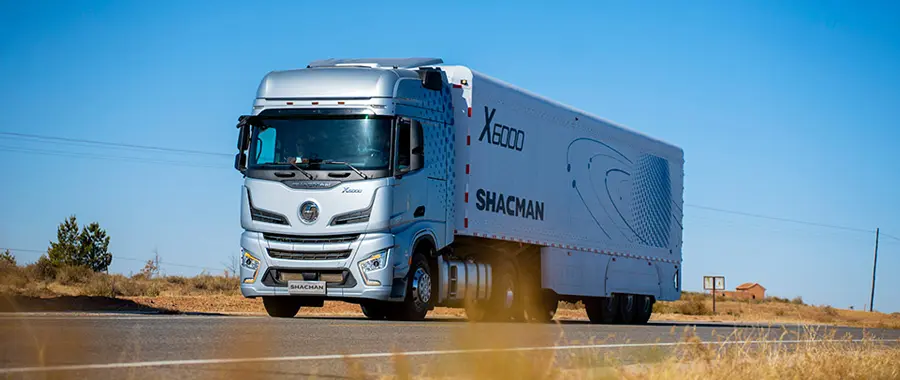
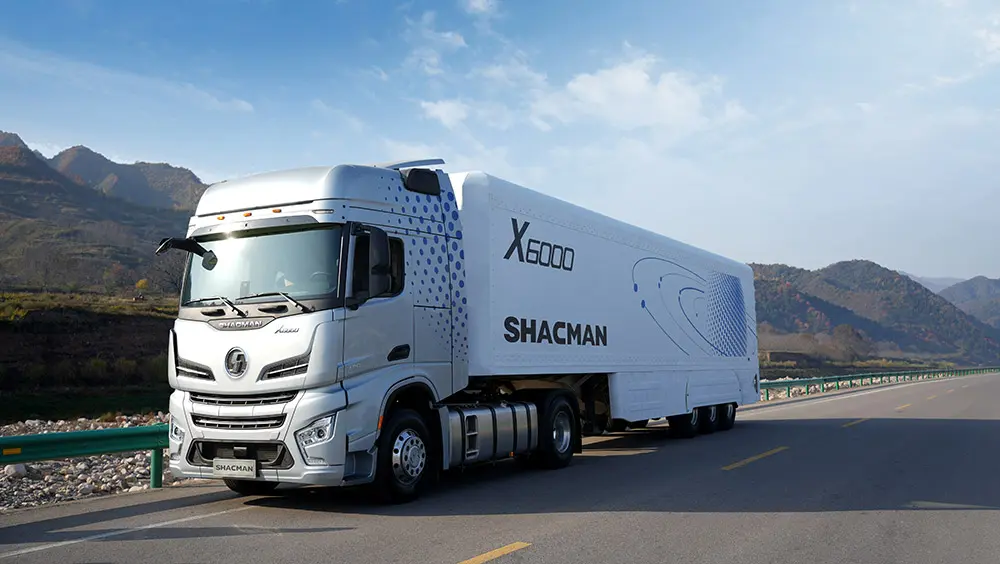
For models equipped with AMT (Automated Manual Transmission), such as the X6000 series with 16-speed AMT:
The AMT with predictive shifting adapts to road conditions and load weight, minimizing driver intervention and improving gearshift precision–
The intelligent AMT transmission Gen2 achieves efficiency up to 99.7%
The AMT intelligently selects gears based on road conditions, enabling efficient transport–
Basic AMT operation:
Forward (D): Push the gear lever forward
Neutral (N): Return the lever to the center position
Reverse (R): Pull the gear lever backward
Downshift: Tap the lever downward while driving
Retarder braking: Push the lever upward (five adjustable gears)
Engine braking: Push the upper switch rightward (gear 1 or 2)
Mode switching: Toggle between A/M (Auto/Manual) and E/P (Economy/Power) modes
SHACMAN’s X/F/H/L series trucks are engineered for reliability, with features like
Euro V-compliant engines for fuel efficiency
Reinforced chassis for heavy loads
Advanced ABS and traction control systems
Global service network across 140+ countries
With over 230,000 units exported, SHACMAN combines innovation with practicality
Always follow local traffic regulations and SHACMAN official operation guidelines–
Never drive with damaged tires under full load
Do not travel in neutral gear — there is no auxiliary brake effect
Check the cab lock before driving — if the cab has not been locked, the lockup warning light will illuminate
For dump trucks: Drive the vehicle only when the power takeoff is disengaged
Always refer to the official SHACMAN manual for model-specific guidelines and consult authorized service centers for complex issues
Disclaimer: This article is based on publicly available information, including SHACMAN official knowledge base, user manuals, and operator guides. For the most current and model-specific instructions, please refer to the official SHACMAN user manual for your specific truck model. Different models (F3000, X3000, X5000, X6000) may have variations in operation procedures.




Copyright @2023 Shacman. All Rights Reserved.