Stay up-to-date with the
Press Releases

As the global energy transition accelerates, wind turbine blades are getting longer, towers are getting taller, and project sites are moving further into remote mountain regions. For heavy-haul logistics operators, this creates a brutal combination: oversized cargo, extreme weights and roads that were never designed for either.
In Southeast Asia, one recent wind power project required exactly this kind of operation — moving a giant turbine blade to a highland site using the SHACMAN X5000 heavy-haul tractor. The result was a real-world demonstration of how a modern Chinese heavy-duty truck platform performs when pushed to its engineering limits.
This case study breaks down the operation, the vehicle configuration, the key specifications and the lessons learned.
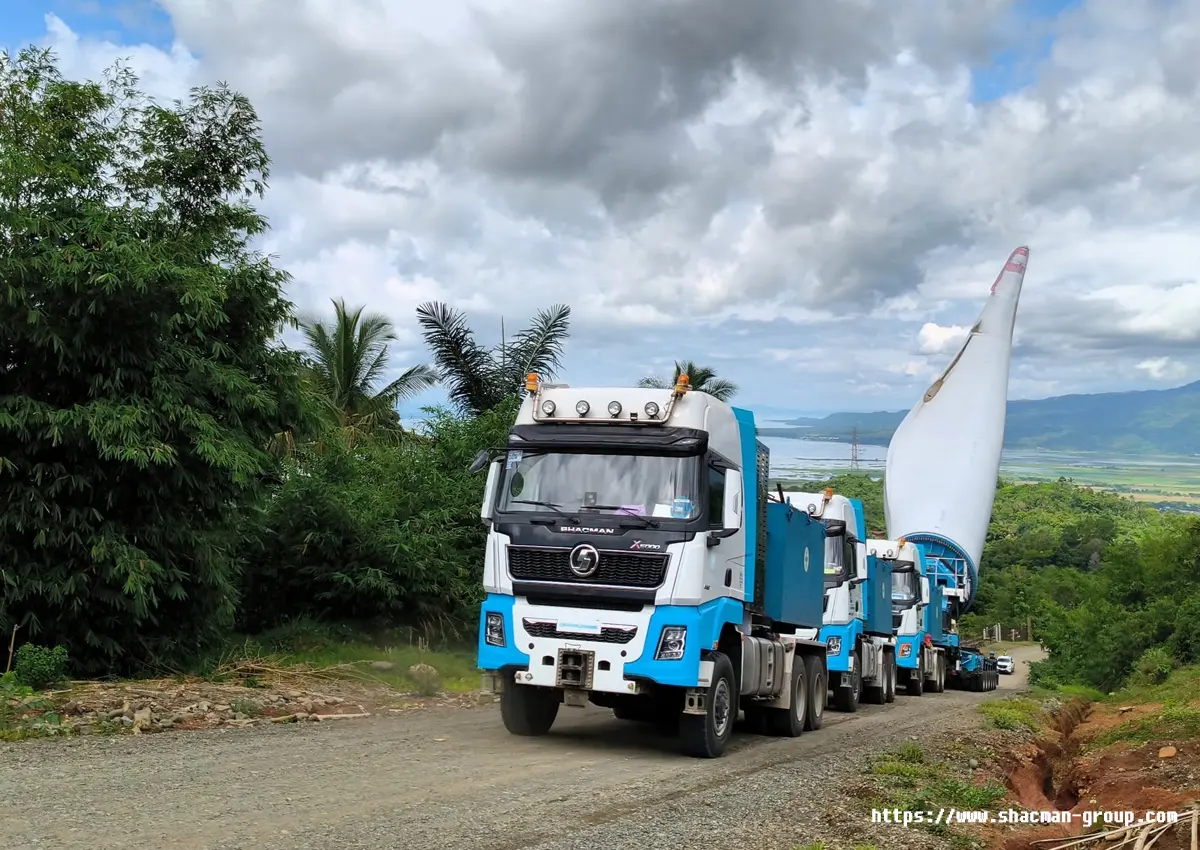
Transporting wind turbine components through mountainous terrain is one of the most demanding tasks in heavy-haul logistics. The obstacles are not theoretical — they are physical and immediate:
Tight hairpin bends that limit the turning envelope
Steep gradients that demand continuous torque
Narrow roads with limited clearance for oncoming traffic
Unpredictable traffic conditions on rural and gravel routes
Long descents that test braking systems, not just engines
The operation was managed by a logistics team with over 40 years of experience in heavy-haul transportation, specializing in power-generation equipment, mining machinery and wind energy components. Their fleet includes modular hydraulic axle trailers, hydraulic lifting systems and specialized blade lifters built for oversized transport.

At a staging yard in the foothills, a crane loaded the turbine blade onto a specialized blade lifter.
Instead of remaining horizontal, the blade was gradually raised toward a near-vertical position. This is a critical heavy-haul technique:
It significantly reduces the blade’s swept envelope
It helps the combination negotiate tight hairpin bends
It maintains clearance when meeting oncoming traffic
It lowers the risk of the blade tip striking terrain or infrastructure
With ballast and transport equipment included, the gross combination weight reached approximately 180 tonnes — a figure that places enormous demands on every component in the driveline.

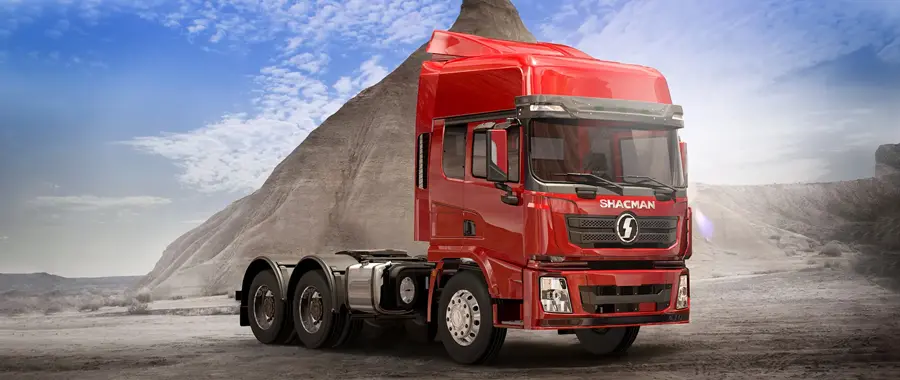
The SHACMAN X5000 deployed for this operation was not a standard tractor. It was configured specifically for heavy-haul duty, with a powertrain designed around one requirement: moving extreme weight from a standstill and keeping it moving uphill.
| Specification | Value |
| Engine | M15 heavy-haul |
| Power | 660 hp |
| Peak torque | 3,200 N·m |
| Torque band | 900–1,400 rpm |
| Axle | Hub-reduction |
| Gross combination weight (this operation) | ~180 tonnes |
The M15 heavy-haul engine delivers 660 hp and 3,200 N·m of peak torque, with maximum torque available across a broad 900–1,400 rpm range.
This torque characteristic provides strong, consistent pulling capability in two critical scenarios:
Low-speed starts under heavy load — when the combination must overcome static inertia
Sustained climbs on steep gradients — when torque must remain stable over long periods
Combined with a hub-reduction axle, the heavy-haul powertrain is engineered to deliver the wheel-end torque required to move extremely heavy combinations through challenging terrain.
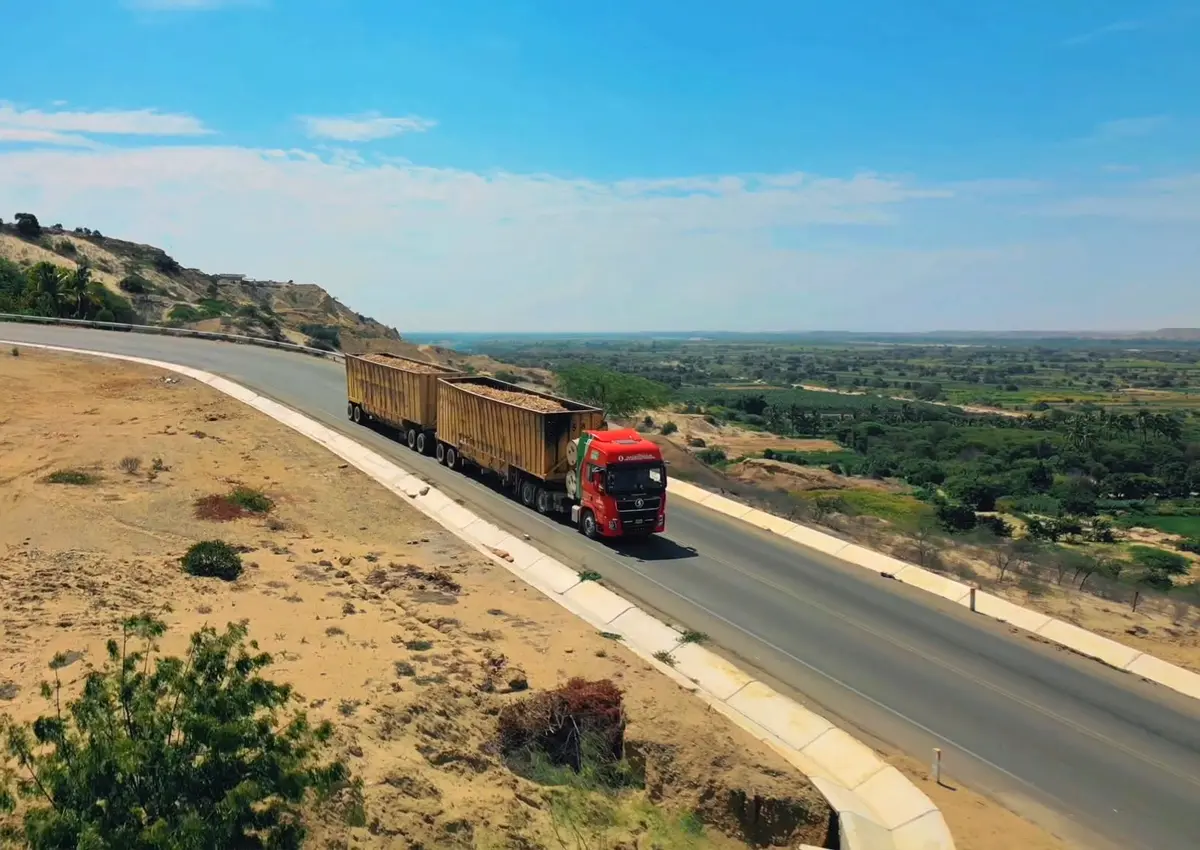
Mountain heavy haul is not only a test of pulling power. Long downhill sections can place equally significant demands on vehicle control and braking performance.
For this operation, the SHACMAN X5000 used a three-level braking system:
Engine braking — primary continuous retardation
Hydraulic retarder — sustained speed control on long descents
Service brakes — additional braking layer when required
For a combination weighing approximately 180 tonnes, maintaining controlled speed on prolonged descents is not a convenience — it is a safety-critical requirement.
This three-level approach allows the driver to manage speed continuously without overheating the service brakes, which is one of the most common failure points in heavy-haul mountain operations.

The steepest climbs presented the greatest challenge.
To move the approximately 100-tonne-class payload through the most demanding sections of the route, three SHACMAN X5000 tractors were connected in tandem using steel cables and worked together to provide additional pulling force.
The convoy progressed steadily along steep and winding gravel roads, with the vehicles, transport equipment and experienced operators working together as one coordinated system.
This tandem configuration illustrates an important principle of extreme heavy haul:
Success depends not only on vehicle performance, but also on the right combination of specialized equipment, route planning and experienced on-site coordination.

After reaching the project site, the blade was unloaded, lifted into position and precisely mated with the turbine hub.
This final stage is where months of planning, route surveys, equipment selection and vehicle performance converge. A blade that has travelled hundreds of kilometres through mountain terrain must align within tight tolerances — a process that depends as much on operator skill as on machine capability.

Wind power development continues to expand across Southeast Asia. As it does, two trends are converging:
Turbine components are becoming larger and heavier
Many new projects are located in remote or mountainous areas
This combination adds another layer of complexity to project logistics. Infrastructure and road conditions in these regions often lag behind the requirements of modern wind turbine transport.
As a result, operators need heavy-haul solutions that deliver the right combination of power, control, reliability and adaptability — exactly the requirements the SHACMAN X5000 was configured to meet in this operation.
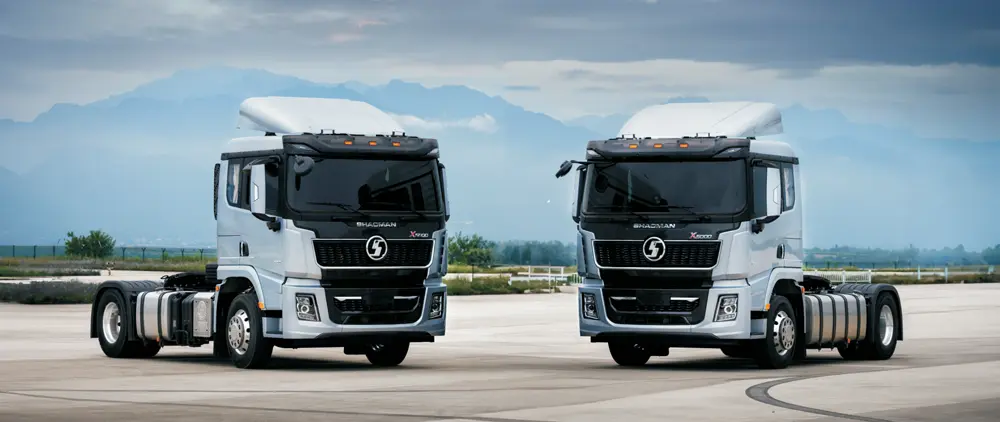
With its heavy-haul configuration and proven X5000 platform, SHACMAN continues to support demanding transportation operations across challenging environments — from mining and construction to power-generation equipment and wind energy components.
For fleet operators evaluating heavy-haul tractors for oversized cargo, the lessons from this operation are clear:
Torque band matters as much as peak torque — the 900–1,400 rpm range keeps pulling power available when it is needed most
Braking is as important as power — a three-level system is essential for 180-tonne descents
Tandem operation multiplies capability — three X5000 tractors delivered the force required for the steepest climbs
Platform maturity reduces risk — the X5000 is a proven base for specialized heavy-haul configurations
SHACMAN X5000 — Built for the toughest missions.

Q1: What is the SHACMAN X5000’s maximum torque?
A: The M15 heavy-haul engine delivers 3,200 N·m of peak torque across a 900–1,400 rpm band.
Q2: How much can the SHACMAN X5000 tow in heavy-haul configuration?
A: In this operation, the gross combination weight reached approximately 180 tonnes, with a payload in the 100-tonne class.
Q3: What braking system does the SHACMAN X5000 use for mountain descents?
A: A three-level system combining engine braking, a hydraulic retarder and service brakes.
Q4: Can multiple SHACMAN X5000 tractors work together?
A: Yes. Three X5000 tractors were connected in tandem using steel cables to handle the steepest climbs.
Q5: What axle configuration does the SHACMAN X5000 heavy-haul use?
A: A hub-reduction axle designed to deliver high wheel-end torque.

Copyright @2023 Shacman. All Rights Reserved. Privacy Policy.