
Stay up-to-date with the
Knowledge

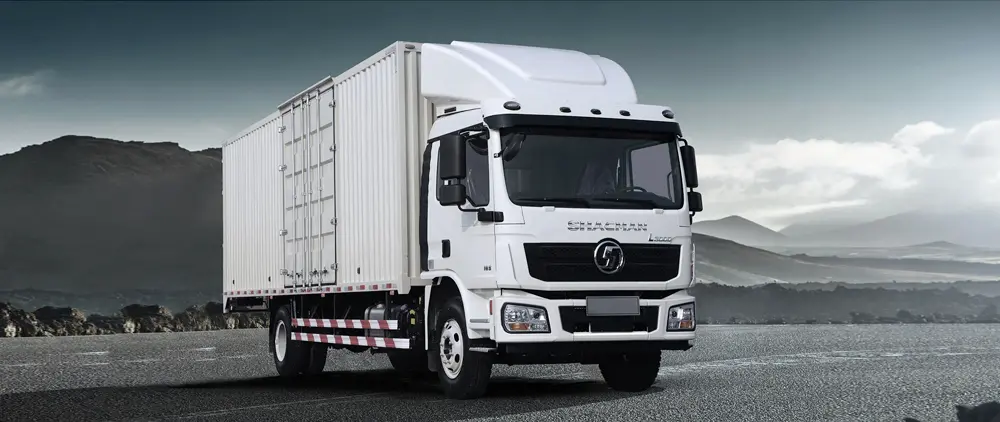
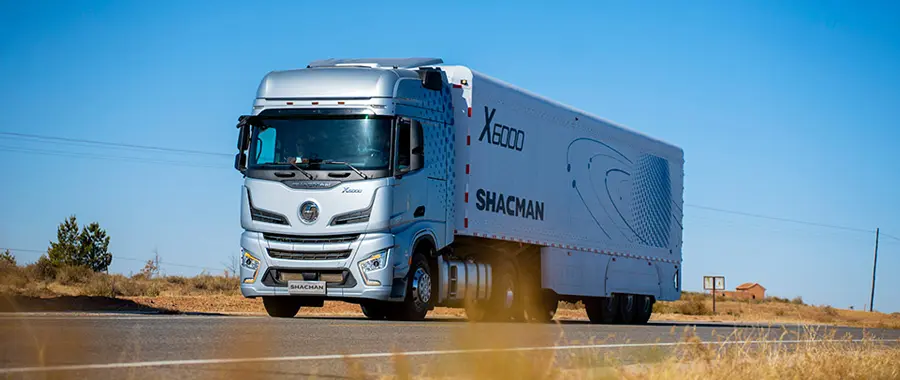
Understanding the transmission system is critical for anyone operating or maintaining a Shacman heavy-duty truck. Whether you are driving a Delong X3000, X5000, X6000, or F3000, the gear configuration and shifting method directly impact performance, fuel efficiency, and transmission lifespan. This guide covers the common gear counts, the differences between manual (MT) and automated manual transmissions (AMT), and step-by-step operating instructions for forward and reverse gears.
Shacman trucks do not have a single fixed gear count. The number of forward and reverse gears depends on the model, engine torque rating, and the specific Fast Gear (FAST) transmission installed. The most common configurations are 12-speed, 13-speed, and 16-speed transmissions.
| Shacman Model / Configuration | Forward Gears | Reverse Gears | Transmission Type | Example Transmission Model |
| X6000 AMT Tractor (High Power) | 16 | 2 | AMT (Automated Manual) | Fast S16AD |
| X3000 Tipper / Tractor | 12 | 2 | Manual (MT) | Fast 12JSD200T-B |
| F3000 Tractor | 12 | 2 | Manual (MT) | Fast 12JSD200T-B |
| M3000 LNG Tractor | 12 | 2 | Manual (MT) | Fast 12JSD200TA |
| G6000 / H6000 Series | 12 or 16 | 2 | AMT / Manual | Fast S16AD / S12MO |
Note on Reverse Gears: Almost all Shacman heavy trucks with Fast Gear transmissions feature 2 reverse gears. The reverse gear ratio is typically designed to provide a strong, controllable reversing speed under heavy load.

Most standard Shacman trucks are equipped with Fast Gear 12-speed manual transmissions. These gearboxes use a range-change mechanism with a Low (L) and High (H) range on the gear lever knob.
L Range (Gears 1–6): Used for starting from a stop, climbing steep hills, and moving under heavy loads.
H Range (Gears 7–12): Used for flat highway cruising and maintaining high speeds with better fuel economy.
Core Rule: Only switch the L/H range selector when the truck is in neutral gear and the vehicle is stationary or moving at a very low speed to avoid damage to the range cylinder.

Shacman 12-speed manual gearboxes generally require double-clutching for smooth operation and to protect the synchronizers.
Upshifting within the same range (e.g., 1st to 2nd):
Depress the clutch pedal fully.
Shift the lever into neutral.
Release the clutch pedal completely.
Depress the clutch pedal again.
Engage the next higher gear.
Release the clutch smoothly while applying throttle.
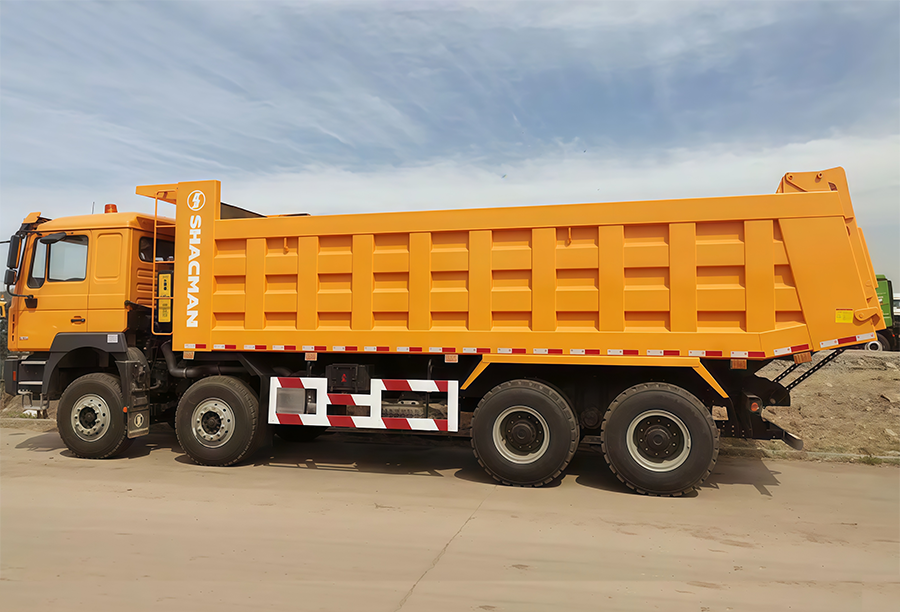
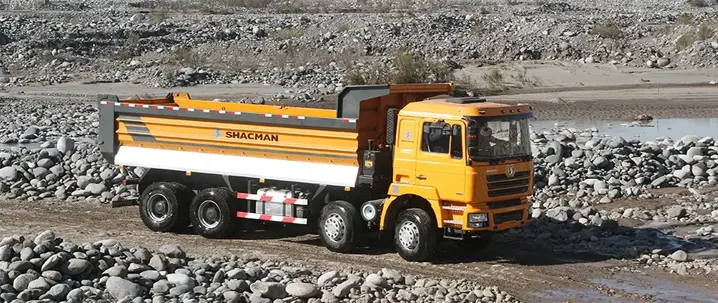
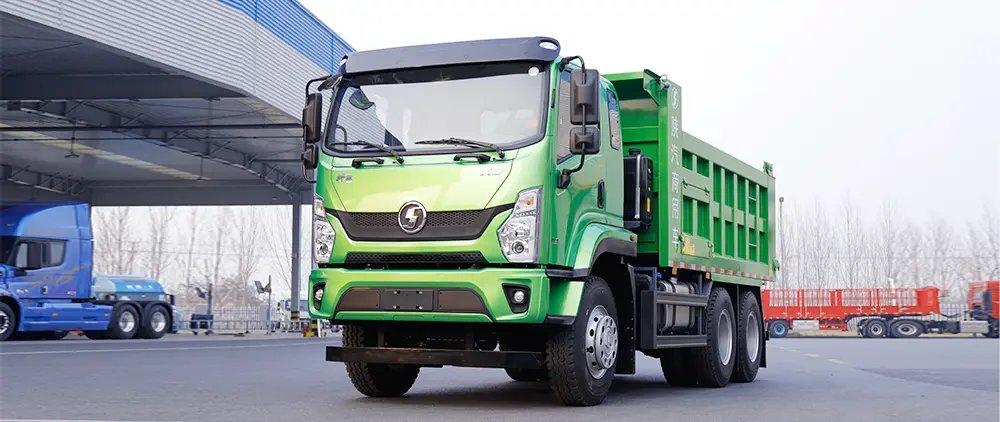
Shacman F3000 Dump Truck
Cross-Range Shift (e.g., 6th to 7th gear):
Shift the lever into neutral.
Toggle the range switch from L to H on the gear knob.
Complete the double-clutch procedure (press-release-press).
Engage 7th gear

Downshifting on Slopes:
Reduce vehicle speed first.
Shift into neutral.
Switch the range selector as needed.
Downshift using the double-clutch method.
Maintain engine RPM between 1200–1800 for optimal power and fuel economy.
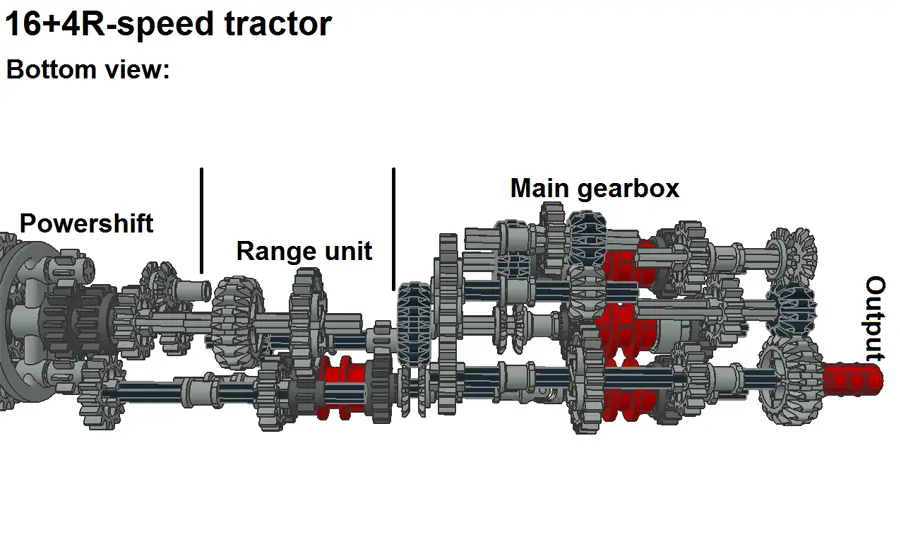
The 16-speed transmission, common in high-horsepower Shacman models, uses a “Double-H” shift mechanism.
Gear Layout: Reverse and gears 1–8 are in the Low Range. Gears 9–16 are in the High Range. Neutral is located between the 5–8 and 9–12 positions.
Range Switching: Use the palm of your hand to slap the shift lever left or right to switch between the Low and High ranges.
Half-Step Shifting (Splitter): The 16-speed gearbox also features a splitter controlled by a switch on the gear knob. Flicking the switch up adds a half-gear, and flicking it down subtracts a half-gear. This allows for very precise gear selection under varying terrain.
Always bring the vehicle to a complete stop. Attempting to shift into reverse while moving will damage the transmission internals.
Depress the clutch pedal fully.
Move the gear lever to the reverse position. You may need to apply firm, deliberate force to overcome the reverse gear lock mechanism, which is designed to prevent accidental engagement.
Release the clutch slowly while gently applying throttle to begin reversing.
Shacman’s newer high-end models, such as the X6000 and G6000, increasingly feature Fast Gear AMT (Automated Manual Transmission) systems, such as the S16AD (16-speed) or S12AD (12-speed). These transmissions combine the efficiency of a manual gearbox with the convenience of automatic shifting.
The AMT system typically uses a column-mounted stalk or a rotary dial on the dashboard. The core positions are:
N (Neutral): For parking and starting.
D (Drive): For forward movement.
R (Reverse): For reversing.
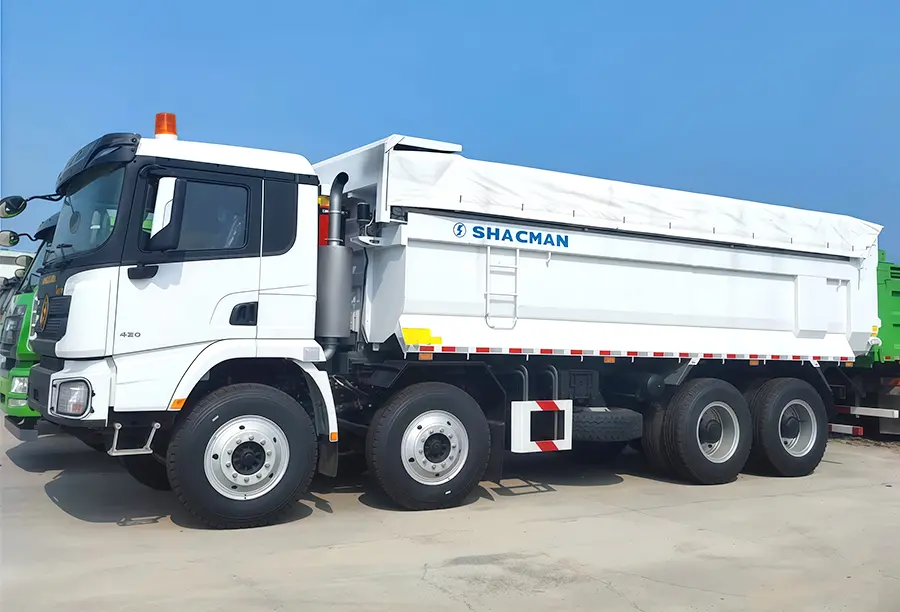
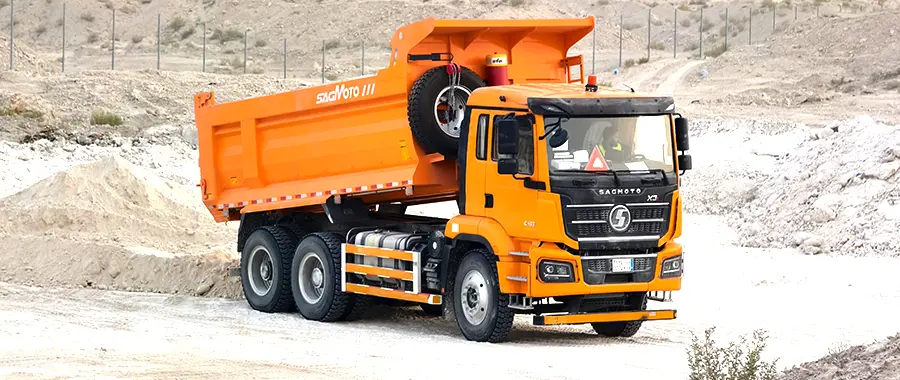
Shacman X3000 8X4 Dump Truck With Tarpaulin
Start the Engine: Ensure the gear selector is in N and the parking brake is applied. Press the clutch (if provided) and start the engine.
Select Drive (D): Press the brake pedal, then move the selector to D. The system will automatically engage the correct starting gear.
Release Brake and Accelerate: Release the parking brake and press the accelerator. The AMT system will shift up and down automatically based on engine load, vehicle speed, and road gradient.
Selecting Reverse (R): You must be completely stopped and pressing the brake pedal. Move the selector to R. The system will engage the reverse gear. Release the brake and gently apply throttle–.
Manual Mode (M): While in D, you can press the A/M button to switch to manual mode. In this mode, you can manually upshift or downshift by tapping the selector stalk forward or backward. This is useful for engine braking on long descents or for precise control in off-road conditions–.
Creep Mode / Load Mode: Many Shacman AMTs have a “Load” or “Creep” mode. This setting is designed for starting on steep grades with a heavy load, allowing for a slower, more controlled clutch engagement to prevent rollback–.

Clutch Discipline (Manual): Always press the clutch pedal all the way to the floor when shifting. Never rest your foot on the clutch pedal while driving (riding the clutch), as this causes premature wear.
No Neutral Coasting: Never coast downhill in neutral. This is extremely dangerous as you lose engine braking and exhaust brake assistance, and it can lead to loss of control.
Air Pressure Check: Shacman trucks use full air brake systems. Before releasing the parking brake, ensure the air pressure gauge reads 6–8 bar. The range-change mechanism in the transmission also relies on air pressure; low pressure can cause shifting difficulties.
Stop Before Reversing: As emphasized in the manual shifting section, always come to a full stop before shifting into reverse, whether driving a manual or an AMT truck. This is the single most important rule to protect your transmission.
The Shacman heavy truck lineup offers a range of transmissions to suit different operational needs. The 12-speed manual remains the workhorse for general hauling and construction, while the 16-speed manual and AMT options provide greater efficiency and driver comfort for long-haul and high-power applications. Mastering the L/H range switching, double-clutching technique, and the AMT selector logic will ensure your Shacman truck delivers reliable performance and a long service life.
For model-specific gear ratios and service intervals, always refer to your official Shacman operator’s manual or consult an authorized Shacman service center.

Copyright @2023 Shacman. All Rights Reserved. Privacy Policy.