
Stay up-to-date with the
Press Releases

Meta Description:
From automatic obstacle avoidance at a Xi’an testing base to driverless reverse parking at logistics parks, China’s new‑energy intelligent heavy‑duty trucks are rapidly scaling up. Follow our visit to Shaanxi Automobile Holding Group and see how autonomous driving technology empowers ports, mines, and long‑haul freight while reducing driver fatigue.
Climbing into the cab of a new‑energy intelligent heavy‑duty truck and pressing the start button, you are greeted not by the familiar roar of a diesel engine, but by a crisp voice prompt. The nearly four‑meter‑tall, tens‑of‑tonnes vehicle instantly “awakens,” and the steering wheel begins to turn automatically.
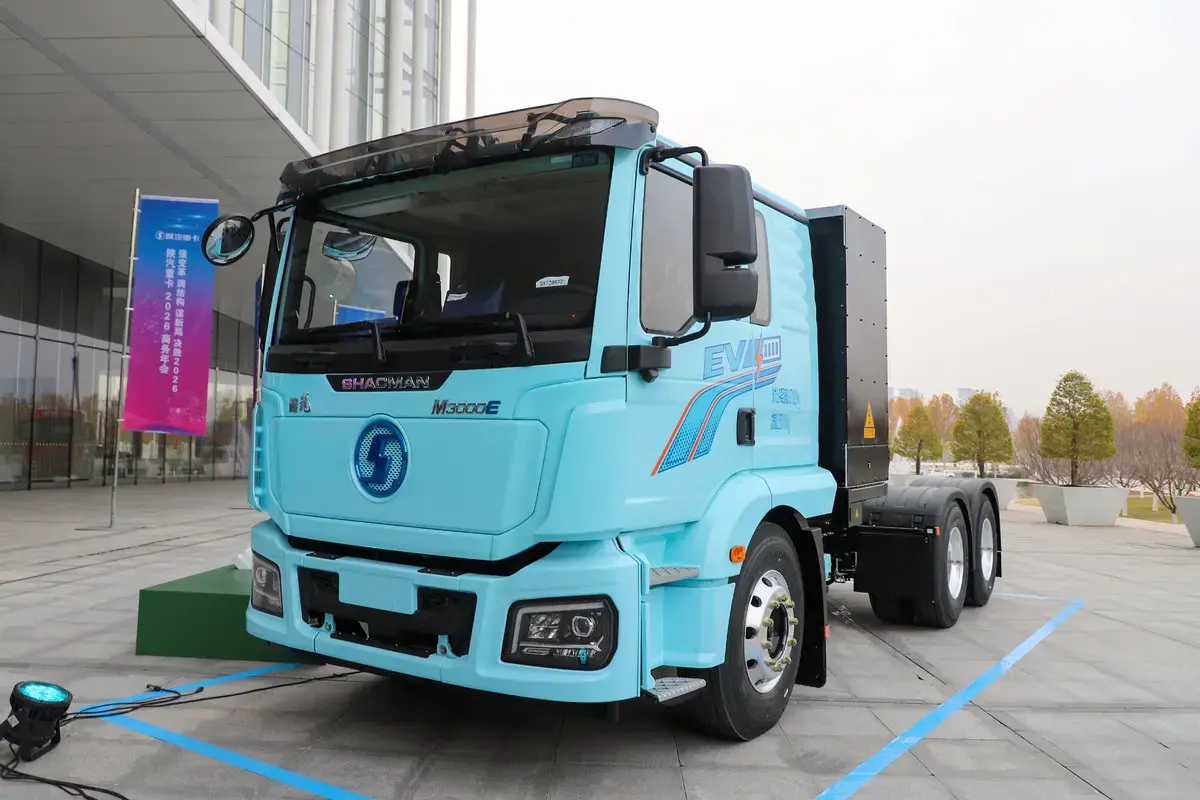
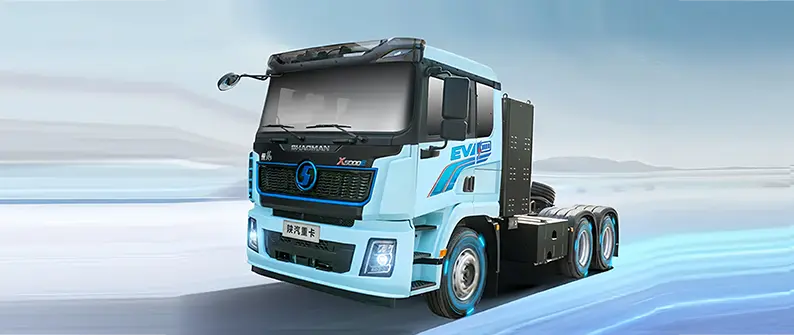
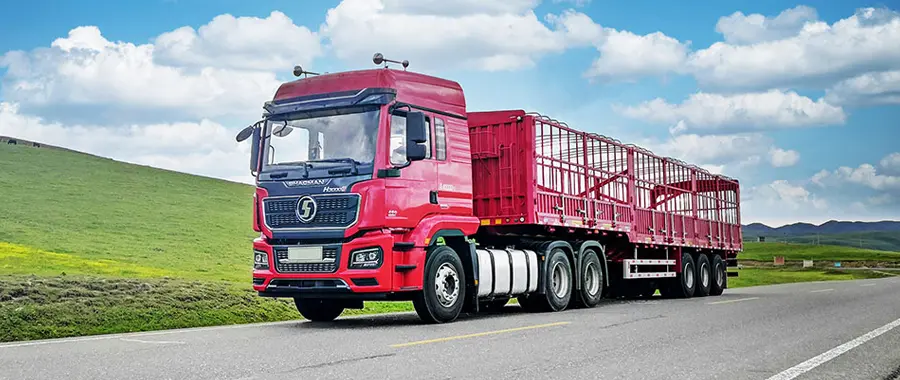
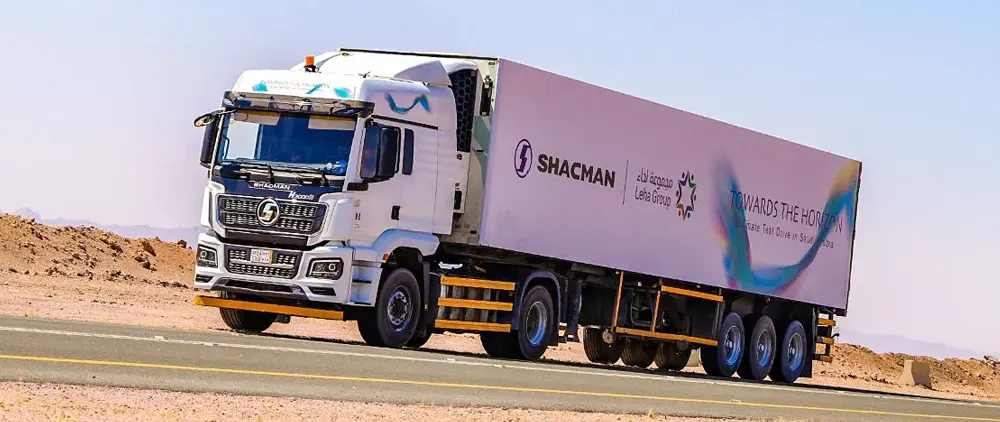
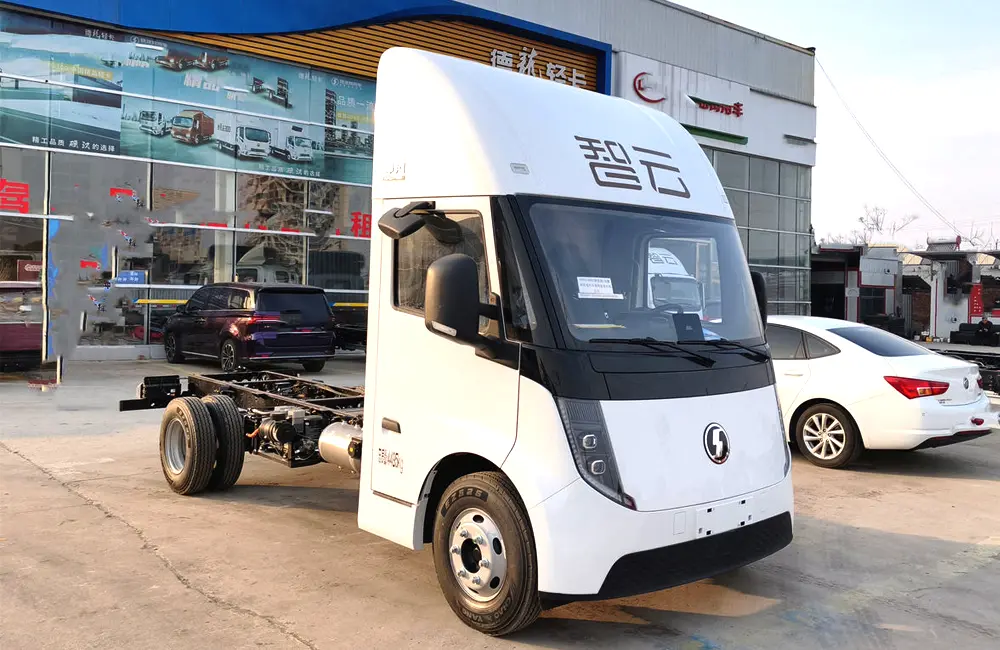
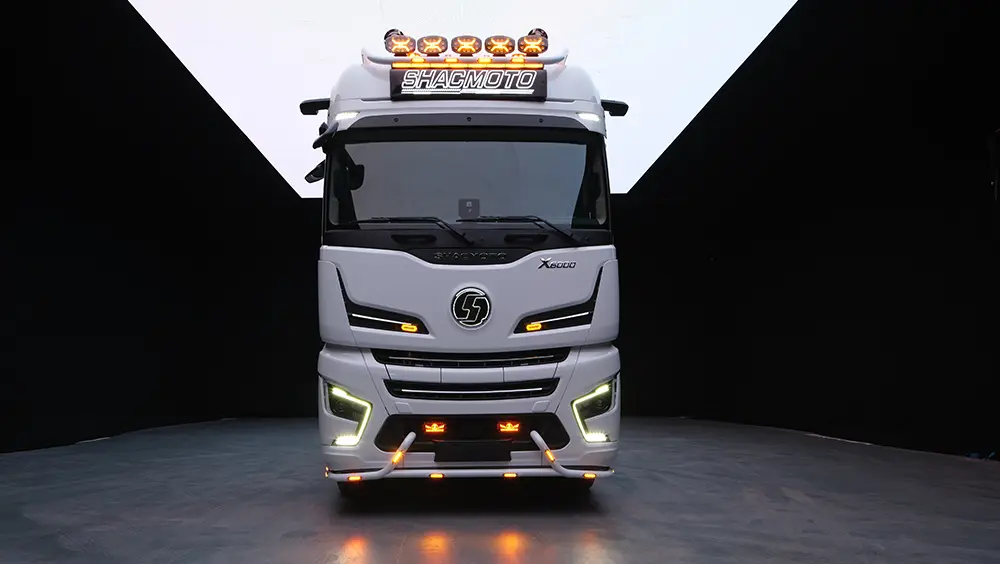
Shacman M3000E Pure Electric Tractor Truck
At a testing base in Xi’an, capital of northwest China’s Shaanxi Province, this giant rolls quietly out of its parking space, accurately detects obstacles, and nimbly manoeuvres around them. Approaching a curve, it automatically adjusts its trajectory – while the central display shows real‑time data on lane markings, nearby vehicles, and potential hazards.
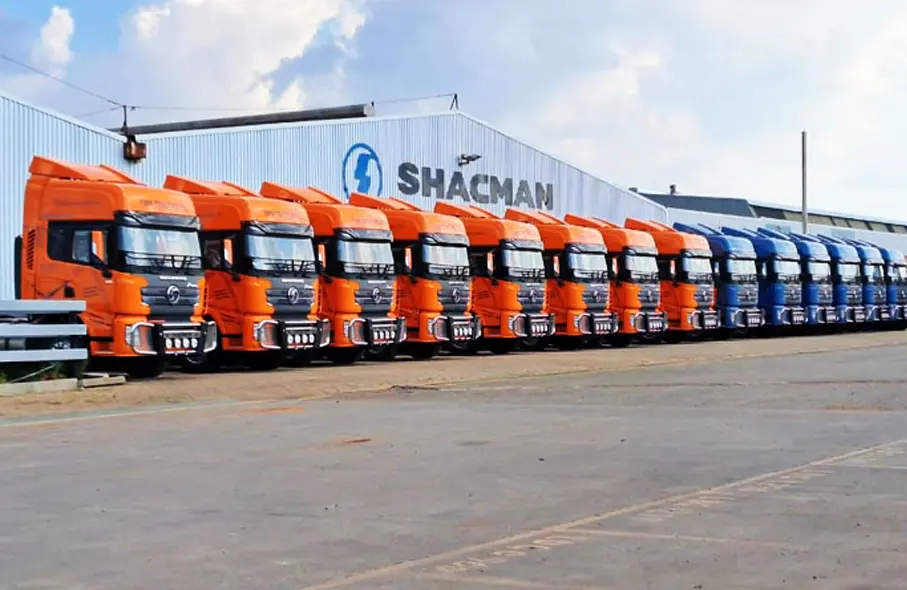
This model comes from Shaanxi Automobile Holding Group Co., Ltd. (SAHG). As a Fortune China 500 enterprise and one of the first companies in China to obtain a permit for intelligent truck driving tests, SAHG has already put its fleet of intelligent heavy‑duty trucks into commercial operation.
Commercialisation Accelerates: China Leads the World in Autonomous Truck Numbers
In recent years, the commercialisation of intelligent connected vehicles has drawn widespread attention. Beyond passenger cars, intelligent heavy‑trucks are rapidly penetrating frontline economic sectors – including mines, ports, factories, and construction sites – with expanding application scenarios.
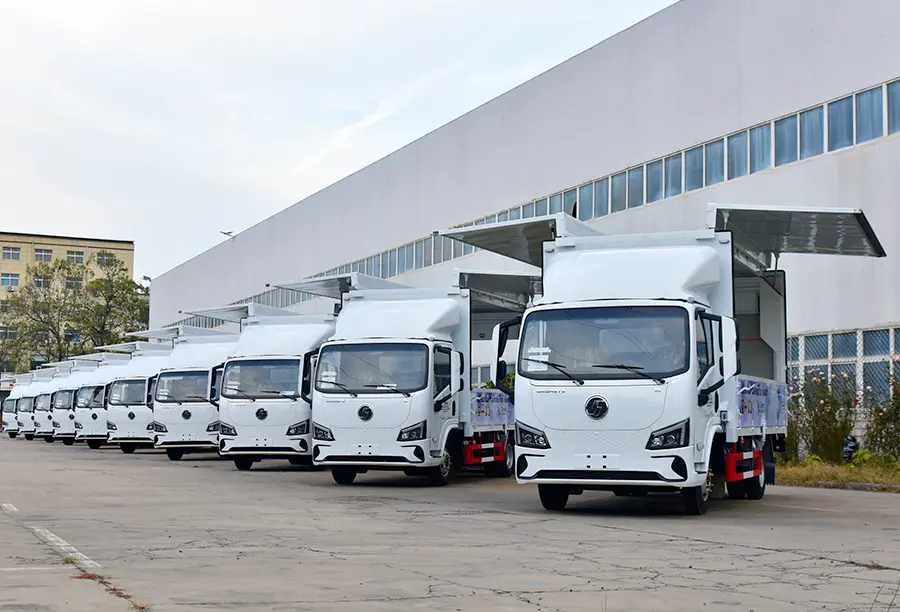
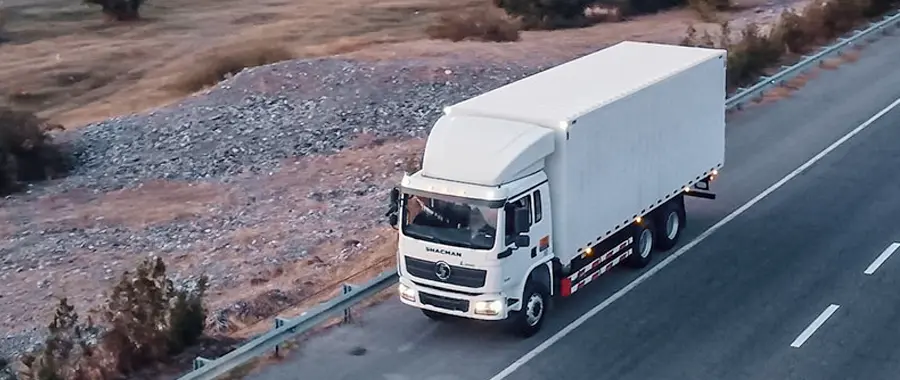
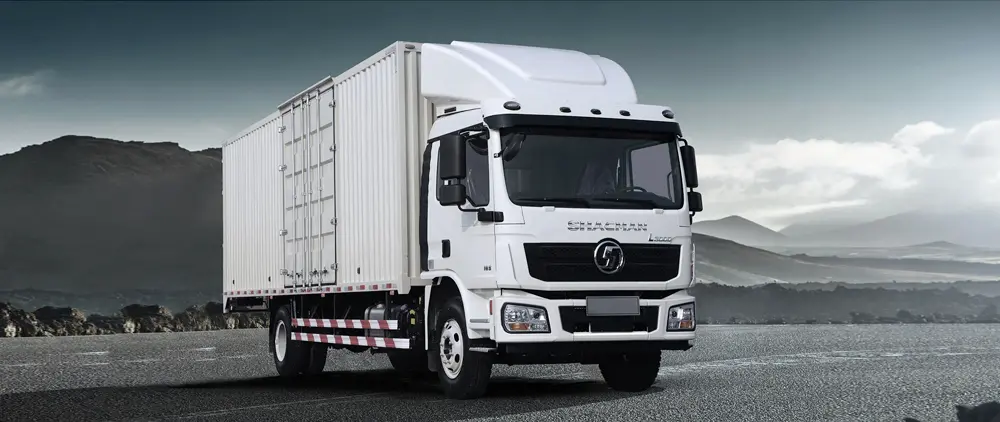
Shacman i9 Electric Wing Light Truck
According to data from GlobalData, the number of autonomous haul trucks in operation worldwide rose from 2,080 in July 2024 to 3,832 in July 2025. Among them, China ranked first globally with 2,108 vehicles, underscoring its leading position in commercial vehicle autonomous driving.
Mr. Bao Weidong, Deputy Director of SAHG’s Automotive Engineering Research Institute, explained that the commercial deployment of intelligent trucks currently follows two main paths: first, in long‑haul highway logistics, where advanced driver‑assistance systems (ADAS) support the driver; and second, in enclosed environments such as ports, mines, and logistics parks, where vehicles operate with a high degree of autonomy.
Why China Is the Ideal Testing Ground for Intelligent Heavy Trucks
China boasts one of the world’s most vibrant road freight markets. In 2025, the country’s road freight volume approached 43.3 billion tonnes. Behind this vast logistics network are tens of millions of truck drivers who work day and night.
The cumulative fatigue from long‑distance driving and the risks of accidents in complex traffic conditions remain persistent challenges for the industry. The core mission of intelligent driving technology is precisely to make road transport safer and less strenuous.
Tian Lei, a 45‑year‑old driver with over a decade of experience, used to suffer from sore shoulders and back for days after a single long trip. Now, his new‑energy heavy‑duty truck is equipped with an intelligent driver‑assist system that automatically maintains a safe following distance and lane centring on highways, greatly reducing physical strain during long‑haul journeys.
“At first I was hesitant to use it, but after trying it on a long trip, I really felt less tired,” said Tian. “I don’t see the machine as replacing me; it’s more like sharing some of the workload when I’m exhausted.”
Unmanned Scenarios Take Shape: From Logistics Parks to Ports and Mines
At a mail distribution centre in western China, the practical value of intelligent trucks is further demonstrated. A 17‑metre‑long driverless transfer trailer slowly reverses into a narrow loading bay. In the past, such a tricky manoeuvre required an experienced driver to make repeated adjustments; now, the steering wheel turns autonomously, precisely avoiding obstacles and parking in one go.
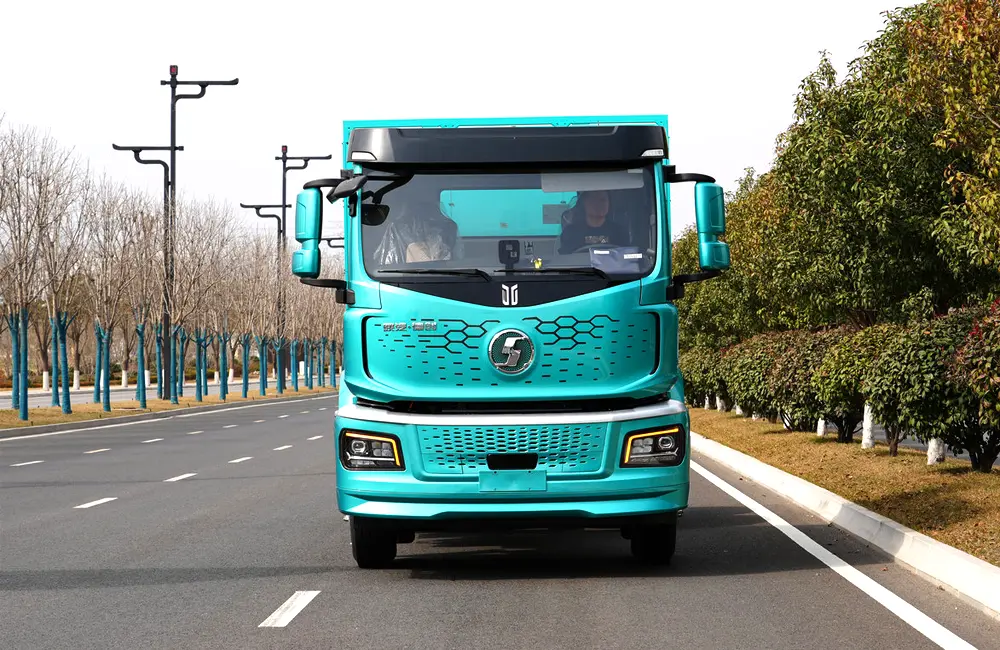
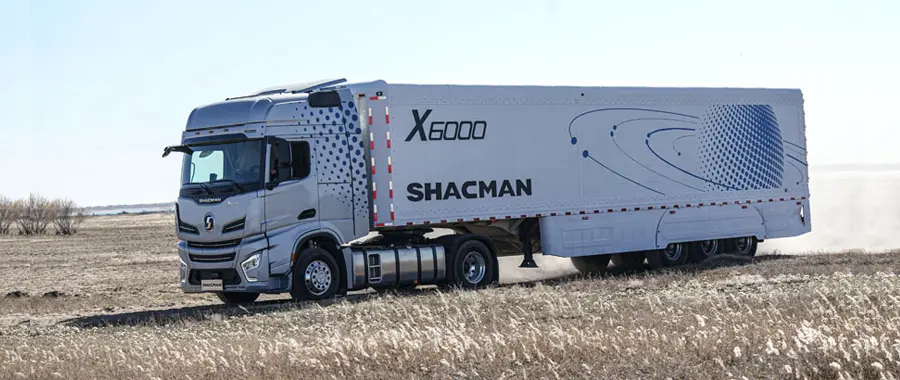
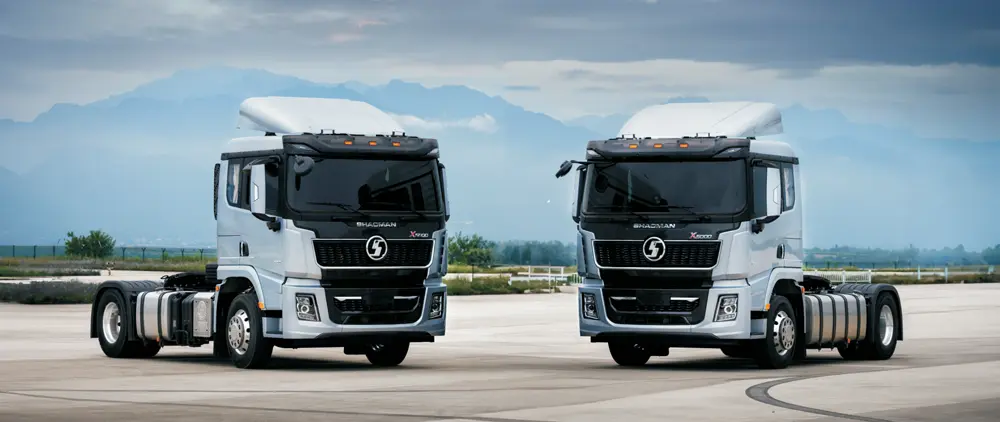
Shacman Pure Electric Tractor Truck
“During peak seasons, driver shortages used to be a major headache. Now, a single safety operator in the control room can dispatch multiple vehicles simultaneously,” said a director of the centre.
Similar unmanned operations are emerging nationwide: at ports, unmanned container trucks handle container transfers efficiently; at mining sites, unmanned mining trucks operate around the clock; and in logistics parks, autonomous short‑haul vehicles shuttle back and forth without interruption.
Technology Infrastructure and Industrial Synergy Drive Large‑Scale Commercialisation
Once confined to laboratories and test fields, autonomous driving technology is now entering real‑world production environments, powered by China’s complete industrial chain and high‑frequency, high‑demand transport scenarios. The rapid development of 5G communications, the BeiDou Navigation Satellite System, and the new‑energy industrial chain are accelerating the large‑scale commercialisation of intelligent heavy‑trucks.
According to national strategic plans, China is committed to building a more efficient, greener, and smarter transportation and logistics system. As a key carrier of this vision, intelligent connected heavy‑trucks are now speeding onto the fast track of development.

Copyright @2023 Shacman. All Rights Reserved. Privacy Policy.