Stay up-to-date with the
Product Reports

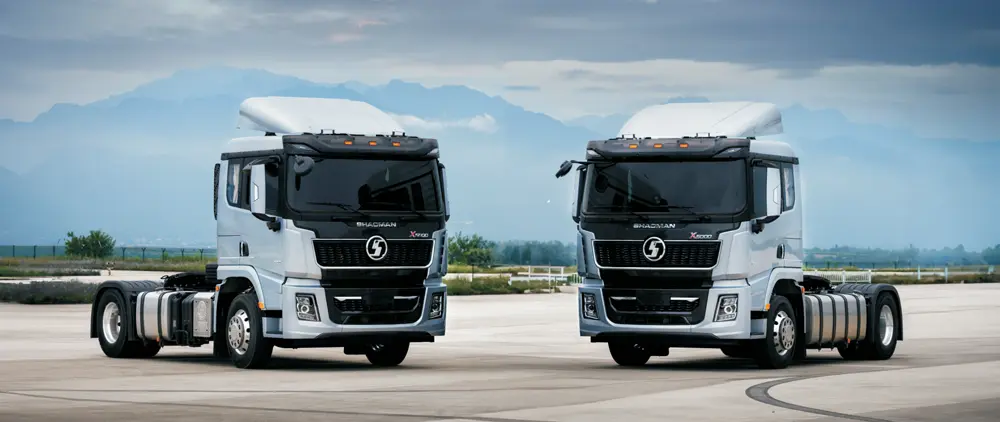
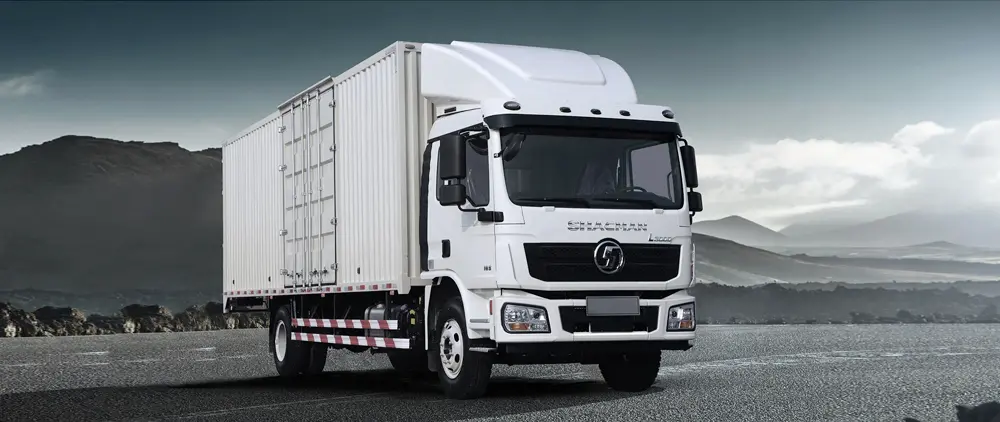
Shaanxi Automobile has launched the 2026 Delong M5000 and Shaanxi Automobile M5000C models in the Henan market. These days, truck model upgrades are common, but this time, I want to discuss something different—not because of the new front end, nor because of a significant increase in horsepower, but because these vehicles carry several “special” signals.
First, let’s state a conclusion: Shaanxi Automobile isn’t just selling trucks this time; it’s redefining the rules of the truck market.
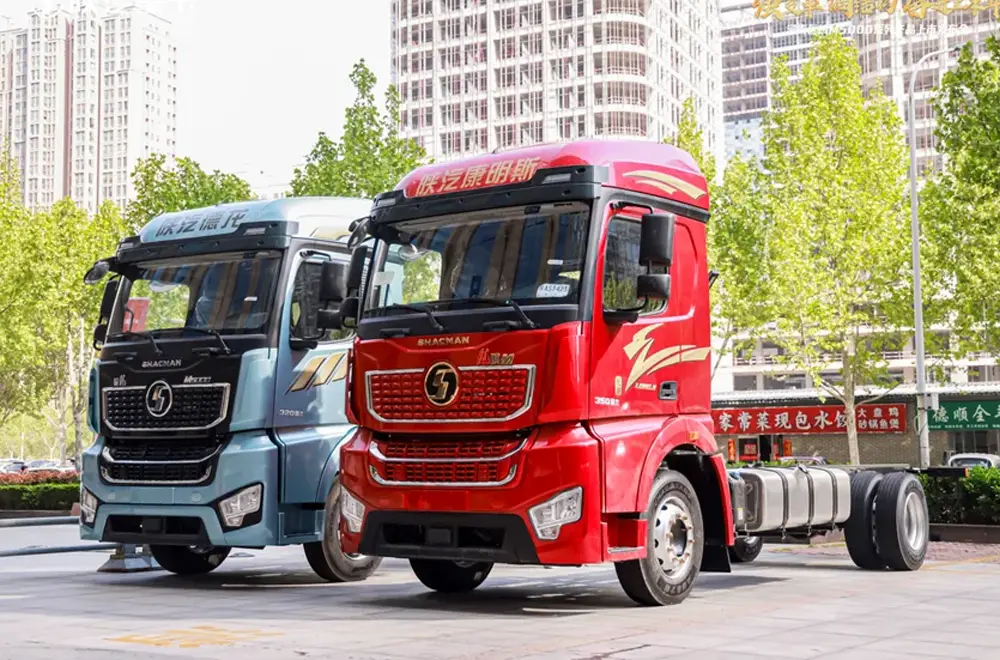
At a time when the industry is generally mired in a “horsepower war” and a “configuration arms race,” Shaanxi Automobile’s move appears remarkably calm and even “unconventional.” The most prominent label on its product brochure isn’t an impressive horsepower, but rather a “brand-new narrow-body platform.”
This isn’t a simple model iteration, but a product definition based on a fundamental restructuring of business logic. It precisely addresses the deepest pain point in the current logistics industry: how to find the optimal solution within the “impossible triangle” of regulations, cost, and efficiency?
From “Large and Comprehensive” to “Narrow and Refined”: Breaking the Ultimate Dilemma of Freight Transportation
The current logistics transportation market presents a fractured picture. On one hand, trunk logistics pursues ultimate economies of scale, with vehicles constantly evolving towards higher horsepower and larger capacity. On the other hand, intercity delivery, rural feeder lines, and special operations, which account for over 70% of transportation volume, are heavily besieged by complex road conditions, strict city entry restrictions, continuously rising operating costs, and the pursuit of ultimate efficiency. The industry’s common response is “compromise”—using scaled-down versions of wide-body trucks designed for trunk lines to barely cope with complex scenarios. The result is often: poor maneuverability, high weight, uneconomical fuel consumption, and a terrible driver experience. Users pay the price with continuous hidden costs.

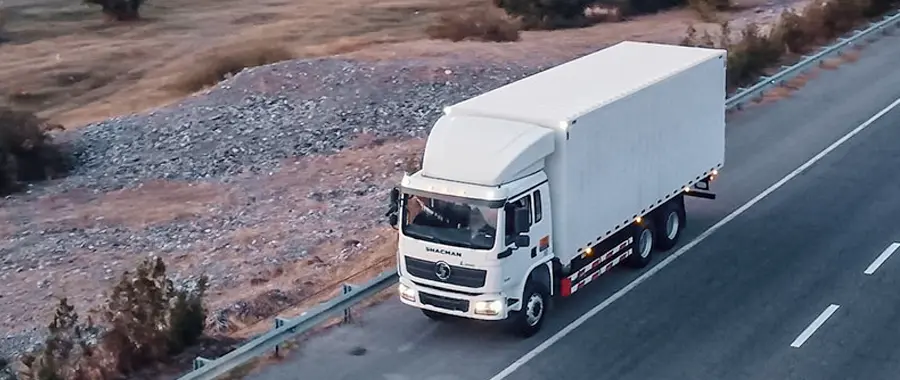
The launch of the Shaanxi Automobile M5000 series is a complete rebellion against this industry inertia. It no longer attempts to be an “all-around” truck, but rather clearly positions itself as a “high-efficiency narrow-body platform,” directly targeting niche markets such as express delivery, agricultural green channel transportation, and light special-purpose vehicles. Shaanxi Automobile’s intention is clear: to abandon the meaningless pursuit of “width” and instead focus all engineering and technological resources on improving “efficiency density.” This marks a shift in the development strategy of medium-duty trucks from “parameter leadership” to “scenario-based success.”
Space Magic: How does the “narrow philosophy” of 2160mm achieve a “wide revolution” in interior experience?
The most common misconception about “narrow-body” trucks is “simplicity” and “oppression.” However, the Shaanxi Automobile Delong M5000 2026 and Shaanxi Automobile Delong M5000C 2026 models demonstrate a textbook-level space optimization solution. Their external width of 2160mm is a precisely calculated figure. It is more than 30 centimeters narrower than mainstream wide-body trucks, meaning that in narrow scenarios such as rural roads, old factory areas, and wholesale markets, drivers gain valuable handling confidence and freedom of movement, significantly reducing the risk of scratches and driver fatigue.

The real magic happens inside the cab. Within a limited width, Shaanxi Automobile engineers achieved an interior width of 1980mm through dashboard optimization and inward-curving door panel design. A crucial achievement was reducing the height of the cab floor hump to an astonishing 160mm. Experienced drivers understand the significance of this figure. Compared to competitors’ typically 260mm or higher humps, this nearly 10cm difference completely liberates the vertical space of the cab. This means the driver can stand naturally and turn freely inside, instead of bending over; the sleeper berth can be as wide as 850mm, making the user’s entire living space open and unconfined. This is not simply “stealing space,” but a systematic innovation based on ergonomics. It solves not only a comfort issue, but also fatigue management and safety benefits during long-distance driving. In today’s increasingly scarce driver market, this concern for “people” is itself a highly efficient investment in productivity.

Behind the 5.3-ton curb weight is a “millimeter war” about compliance benefits. For compliant standard-load transportation, every kilogram reduction in vehicle curb weight means a one-kilogram increase in legally loaded cargo. In the face of razor-thin profit margins in the transportation industry, this directly impacts the survival of operators. Shaanxi Automobile’s M5000 series elevates “lightweighting” to a core competitive advantage. Its 9500 single-axle chassis boasts a curb weight of only 5.3 tons, placing it among the top tier in the industry. This “lightness” isn’t achieved through cost-cutting measures that sacrifice load capacity, but rather through a comprehensive strategy.
Let’s break down the underlying logic of the two models:
First, the 2026 M5000C, featuring a Cummins D4.5 powertrain. It delivers 280 horsepower and achieves a fuel consumption of 14-16 liters per 100 kilometers. The value of these figures lies not in the numbers themselves, but in their target market—express delivery, standard-load highway driving scenarios. These users’ core demand isn’t “high horsepower,” but rather “the lowest fuel consumption while ensuring sufficient horsepower.” Cummins’ fuel economy in this displacement range is renowned, and coupled with the wide gear ratios of the 10-speed transmission, the engine consistently operates within its economical RPM range during highway cruising. From a Total Cost of Ownership (TCO) perspective, this powertrain can save users nearly 15,000 yuan in fuel costs annually—a calculation any fleet owner can make.

Looking at the Shaanxi Automobile M5000 2026 model, it follows the Weichai WPP7H 320hp route. This is clearly aimed at agricultural and sideline product green channel transport and heavy-duty daily necessities. What are the characteristics of green channel users? Time pressure, fluctuating loads, and complex road conditions. 320 horsepower is considered “overkill” for a 6.8-meter vehicle, but it is precisely this redundant design that allows users to climb hills fully loaded with vegetables without downshifting or increasing engine speed, and without worrying about fuel consumption from the engine’s roar. The relaxed driving rhythm is itself a form of efficiency.
Both vehicles share a chassis architecture, but their power orientations are completely different. The Shaanxi Automobile M5000C is a “surgical scalpel,” precisely targeting the efficient standard-load scenarios of express delivery; the Shaanxi Automobile M5000 is a “woodcutter’s axe,” dealing with the rough conditions of heavy-duty green channel transport. Defining two different product characteristics on the same platform demonstrates that Shaanxi Automobile’s product planning team has reached a level of understanding of market segments that is “one vehicle, one scenario.”
Even more intriguing is its 10T-class drive axle, which uses a 3.9 gear ratio, perfectly matching the ultra-wide gear ratio range of the SQ10MO ten-speed transmission. This powertrain not only provides smooth shifting but also allows the engine to consistently operate within its optimal economic range. The benefits of lightweighting are immediate. Assuming competitors weigh 300 kg more, and based on 150,000 km of annual operation and a rough calculation of 0.5 yuan per ton-kilometer freight rate, the potential revenue loss from load reduction alone exceeds 20,000 yuan. The “lightness” of the Shaanxi Automobile M5000 directly translates into “heaviness” in the user’s pocket.
The truck market in 2026 is undergoing a silent differentiation. On one hand, price wars are intensifying, with channel inventory pressure and price cuts for volume; on the other hand, leading companies are accelerating product platformization, powertrain self-sufficiency, and precise scenario definition. The 2026 Shaanxi Automobile M5000/M5000C clearly belongs to the latter category.
It’s not a perfect vehicle—for example, the interior materials still have room for improvement, and the interactive logic of the intelligent cockpit isn’t quite passenger car-like enough. However, in three core dimensions—precise power matching, spacious cab, and well-executed lightweight chassis—it delivers above-average results in the industry.
For logistics professionals, the logic for choosing a vehicle also needs to evolve. Previously, it was “good enough,” now it’s “even a little bit off is unacceptable.” Because freight rates aren’t rising, fuel costs aren’t falling, and regulations aren’t loosening—the only variable is the efficiency of the vehicle you have.
The 2026 Shaanxi Automobile M5000, at least on this narrow path of efficiency, has carved out a worthwhile route.
This “narrow-body” offensive, which began in Zhengzhou, may well set off a new wave of value definition in the mid-sized commercial vehicle market.

Copyright @2023 Shacman. All Rights Reserved. Privacy Policy.