

Stay up-to-date with the
Press Releases

1. Cost parity arrived before the technology was “perfect.” An electric heavy truck in China still costs roughly CN¥450,000 (US$64,000) more than a diesel equivalent before subsidies. But the operating math changed the purchase decision. In high-utilisation, fixed-route operations—mines, ports, steel mills, urban construction—the electricity-versus-diesel differential recovers the premium within the first ownership cycle. China’s diesel demand is projected to fall by about 230,000 barrels per day in 2026, with battery-electric and LNG trucks doing most of the work.
2. Battery swapping solved the uptime problem. China’s answer to charging time was not faster chargers alone—it was standardised swap stations. The country’s largest heavy-truck swap operator ran about 300 stations at the end of 2025, with plans for 900 by the end of 2026 and 2,000 in 2027. Standardised packs are exchanged in about five minutes, which is faster than a diesel refuel and decouples vehicle uptime from charging dwell time. This is the single most important operational difference between China’s electric truck market and Western markets, where swapping is almost entirely absent.
3. The product portfolio matured beyond converted diesel platforms. China’s electric truck leaders are no longer selling battery packs dropped into existing chassis. The market has segmented into purpose-built platforms for closed-loop, high-frequency operations: mining sites, ports, construction sites, and urban distribution. In the first quarter of 2026, traditional heavy truck makers accelerated their electric launches, and SINOTRUK’s electric heavy truck sales expanded by 57%, outperforming some early movers.
The Chinese market has sorted itself by duty cycle. Electric adoption is concentrated where routes are fixed, return-to-base charging or swapping is available, and payload is not sacrificed to battery weight.
| Use Case | Why Electrification Works | Typical Platform |
| Urban construction & muck hauling | Short fixed routes, return-to-base charging, emissions restrictions in cities | 6×4 / 8×4 electric dump trucks |
| Port & terminal shuttling | Low speed, high torque, height-restricted environments, 24/7 operation | Low-profile terminal tractors |
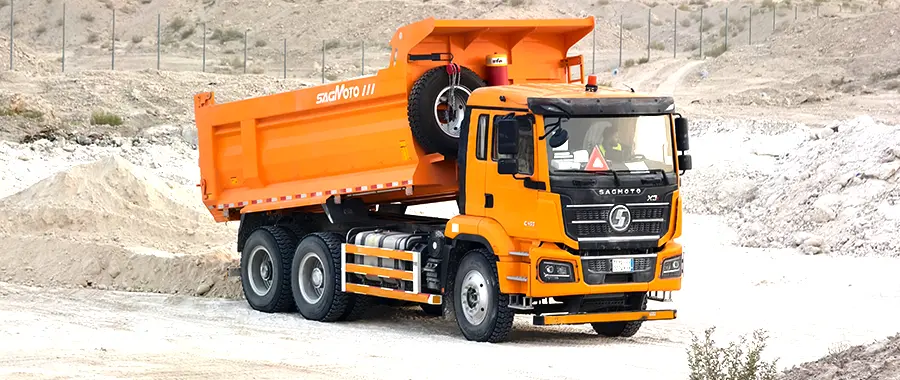
| Mining & quarry haulage | Fixed haul circuits, regenerative braking on descent, high energy recovery | Heavy mining dump trucks |
| Regional distribution | Return-to-base overnight charging, predictable daily mileage | Light and medium-duty electric trucks |
| Long-haul (emerging) | Swap networks along corridors, larger batteries, megawatt charging | 6×4 electric tractors with 400–600 kWh |
The common thread is route predictability. Where a fleet knows its daily kilometres and can guarantee a charging or swapping window, the electric business case closes. Where routes are variable and infrastructure is absent, diesel remains cheaper.
SHACMAN’s electric range covers the duty profiles above with platforms designed for affordability, payload efficiency, and charging flexibility. The lineup is available through the company’s New Energy hub, and the specifications below are drawn from SHACMAN’s own product materials.
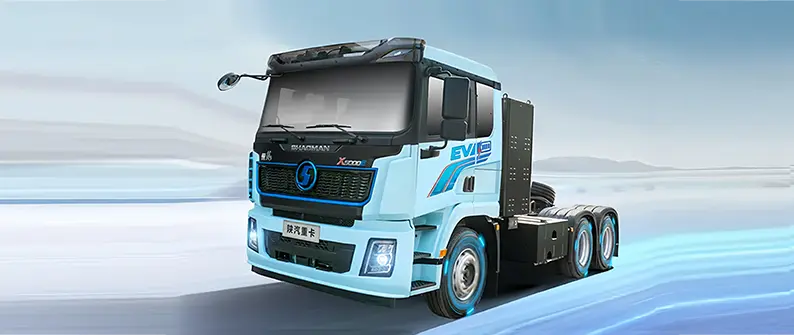
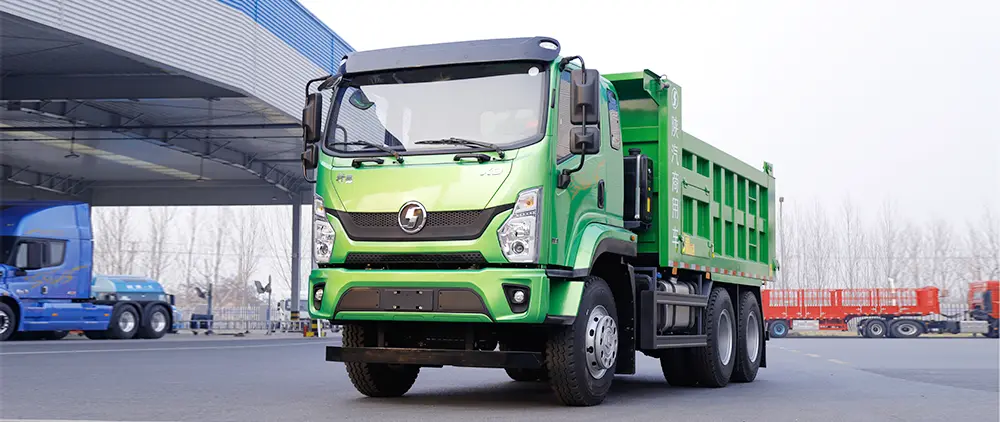
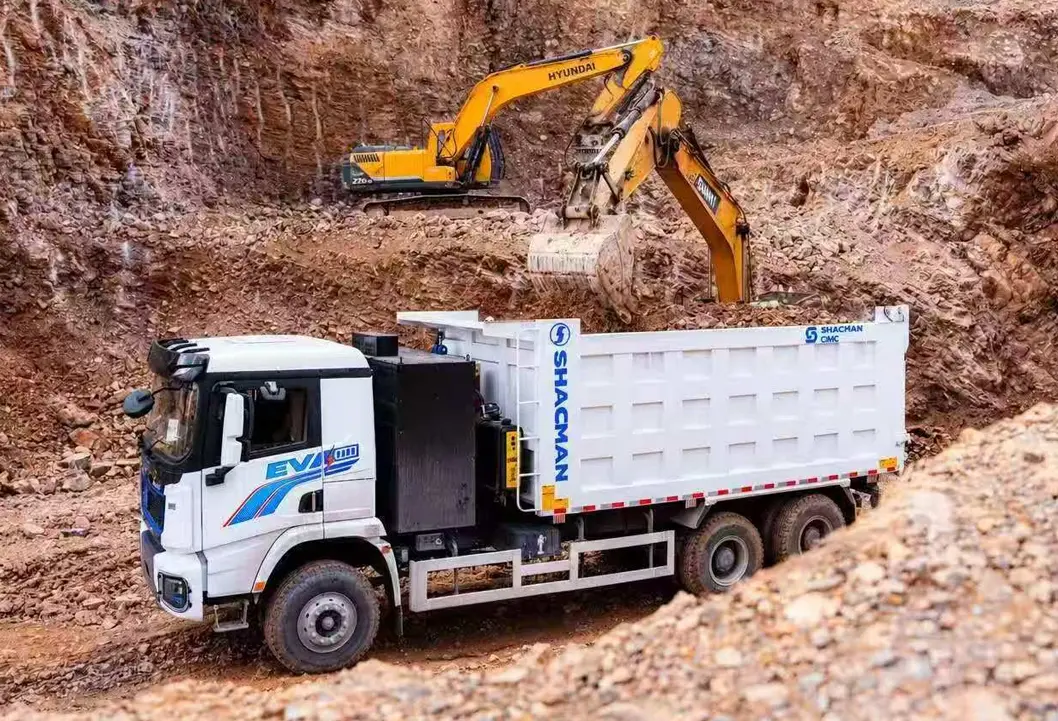
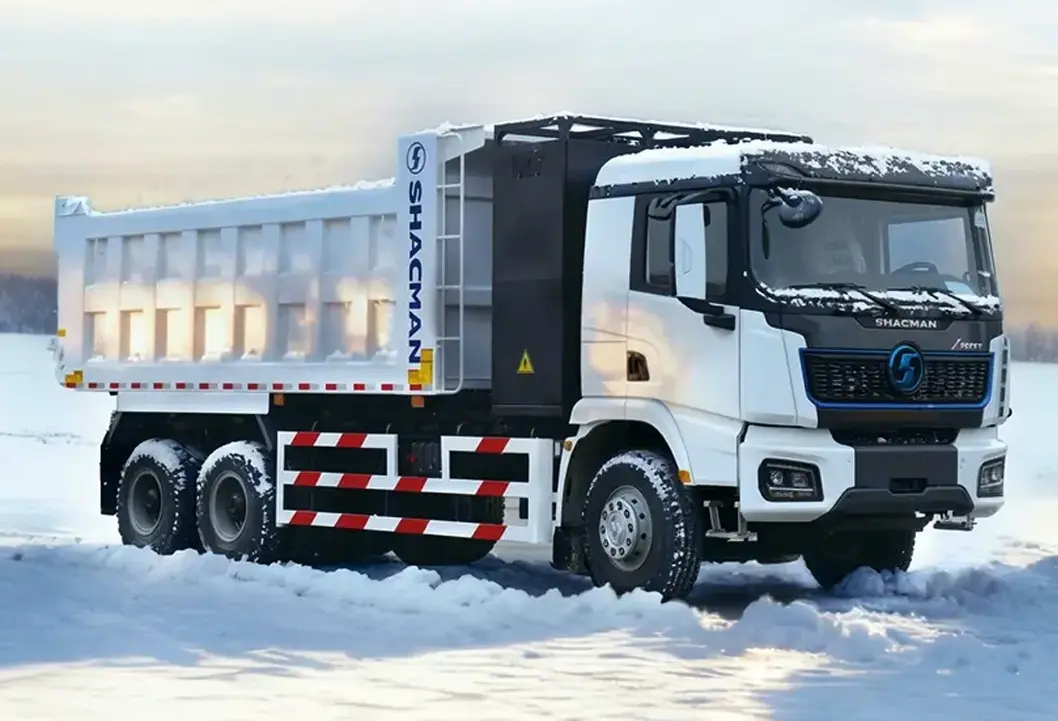
SHACMAN X5000E 6×4 Electric Dump Truck targets urban construction, mining, and infrastructure projects. It pairs a permanent magnet synchronous motor with a reinforced chassis and a fast-charging LFP battery.
| Parameter | X5000E 6×4 Dump Truck |
| Motor rated / peak power | 290 kW / 430 kW |
| Battery | 310.66 kWh LFP |
| Transmission | 6-speed AMT |
| GVW | 25,000 kg |
| Dumping angle | Up to 50° |
| Energy recovery | Regenerative braking increases efficiency by up to 15% |
A higher-capacity variant with 400.6 kWh and approximately 300 km range is also documented. For buyers comparing heavy electric tippers, the 430 kW peak power is the relevant figure: it handles steep gradients and heavy payloads without the torque lag that affects converted diesel platforms.
Product page: SHACMAN X5000E EV Dump Truck
SHACMAN H6000E 8×4 Electric Dump Truck is the higher-payload alternative, built on SHACMAN’s New Energy 2.0 platform for urban muck hauling and construction waste transport.
| Parameter | H6000E 8×4 Dump Truck |
| Drive | 8×4 |
| Cargo box | 6 m × 2.35 m × 1.5 m (rear-dump) |
| GVW | 31 t |
| Rated payload | 12.22 t |
| Battery | 400.61 kWh / 600.92 kWh (optional) LFP |
| Motor rated / peak power | 286 kW / 450 kW |
| Peak torque | 1,500 N·m |
The 600.92 kWh option gives the 8×4 enough capacity for longer urban circuits where charging is limited to overnight depot sessions—a direct answer to range anxiety for fleets running 10+ hour shifts.
Product page: SHACMAN New Energy
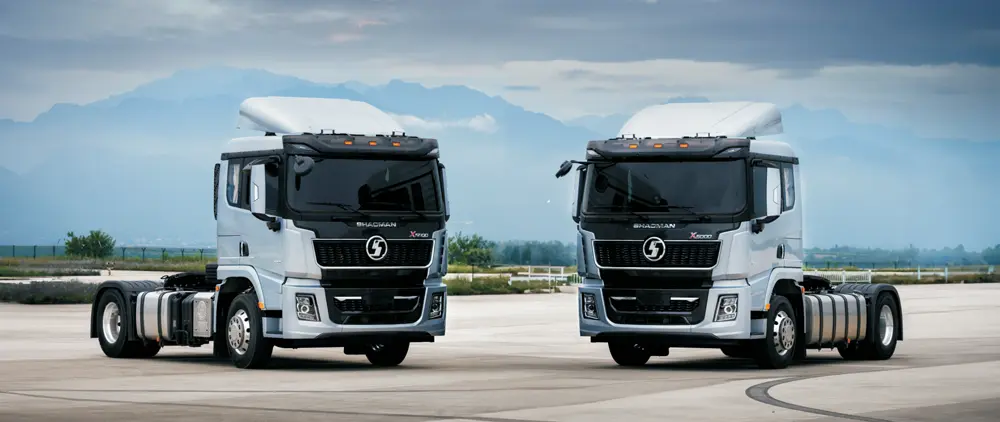
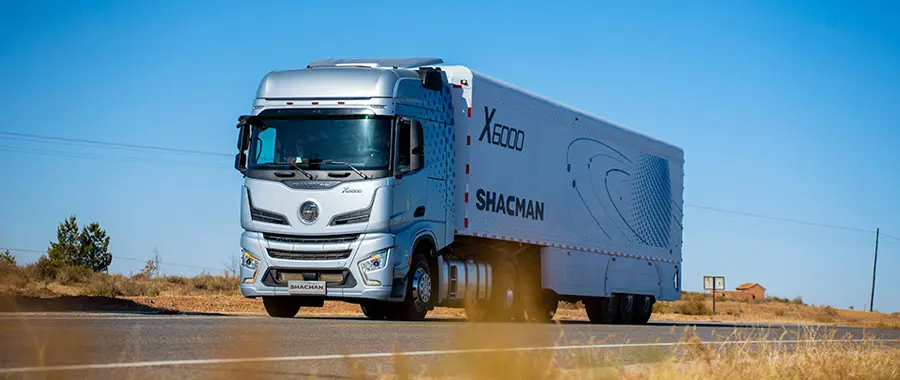
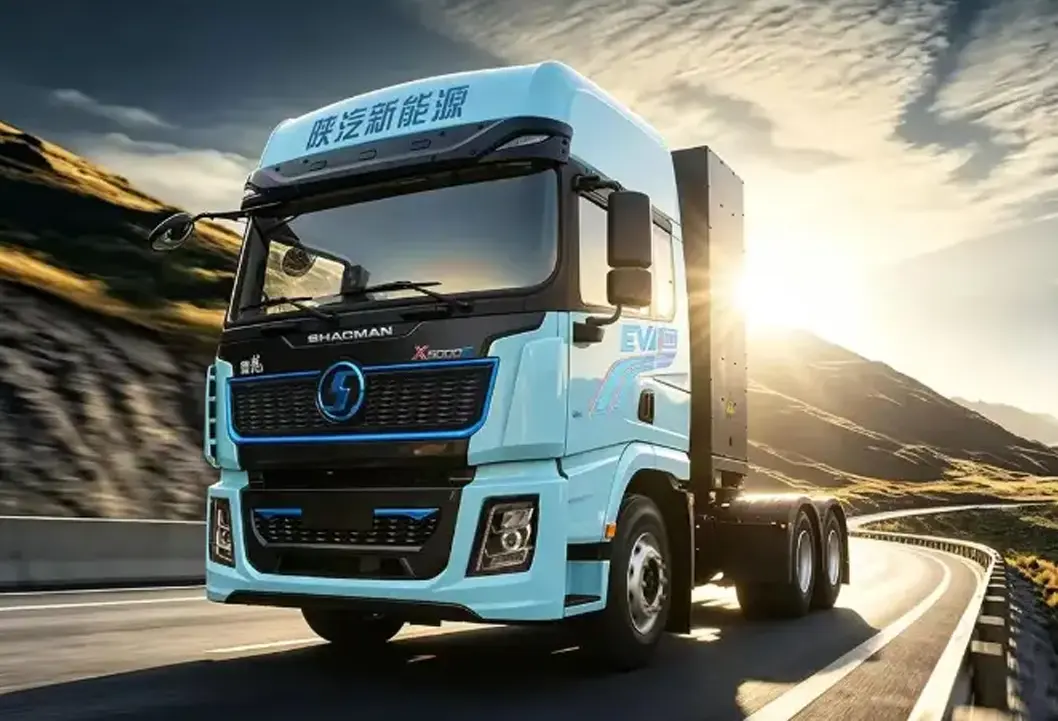
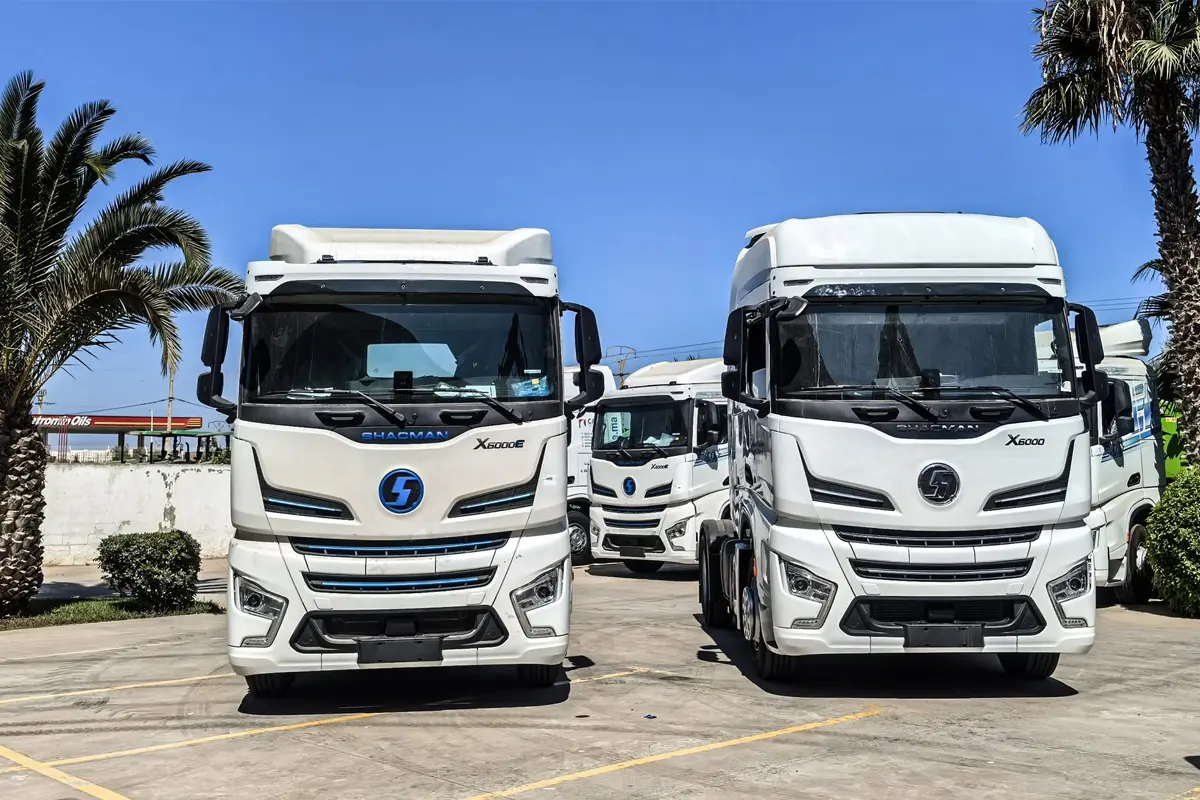
SHACMAN X5000E 6×4 Electric Tractor is the flagship long-haul-capable platform, available with multiple battery configurations to match corridor length.
| Parameter | X5000E 6×4 Tractor (representative config) |
| Motor rated / peak power | 270 kW / 410 kW |
| Rated / peak torque | 1,400 N·m / 2,400 N·m |
| Battery | 352.08 kWh LFP |
| GVW | 49,000 kg |
| Battery cycle life | Over 8,000 charges |
| Max speed | 89 km/h |
Higher-capacity configurations range from approximately 200 kWh to 600 kWh, with the ~600 kWh pack providing up to 450 km of range. The platform supports dual-gun 900A charging—which adds up to 120 km of range in 15 minutes—and 5-minute battery swapping for 24/7 operation.
Product page: SHACMAN X5000E EV Tractor Truck
SHACMAN M5000E Electric Tractor is the lightweight option, positioned for payload efficiency. SHACMAN states it is 400 kg lighter than similar products through high-strength steel and aluminium alloy components.
| Parameter | M5000E Tractor |
| Motor peak power | 500 kW (~680 hp) |
| Battery | 400 kWh LFP |
| Range (standard conditions) | Over 300 km |
| Charging | Dual-gun DC fast charging, 600A; 20–80% in ~40 minutes |
| Kerb weight | ~9.2 t (400 kg lighter than comparable models) |
| Energy consumption | Adaptive regeneration + thermal management reduces consumption by 10% |
For regional distribution and port shuttles where the truck returns to base each shift, the 40-minute 20–80% charge fits a meal break. That is a cheaper operational profile than a larger battery that adds purchase cost and weight without being used.
Product page: SHACMAN New Energy
SHACMAN M3000E Electric Tractor is the port and industrial specialist, with a low-profile cab designed for height-restricted container yards.
| Parameter | M3000E Tractor |
| Motor peak power | 360 kW |
| Battery | 400.61 kWh LFP |
| Climbing ability | ≥30% at full load |
| Curb weight | 8,800 kg |
| Max speed | 90 km/h |
| Three-electric warranty | 5 years / 200,000 km |
The ≥30% full-load gradeability addresses the ramps and dock approaches that define port operations, and the 5-year/200,000 km three-electric warranty is a direct response to durability concerns.
Product page: SHACMAN M3000E Pure Electric Tractor Truck
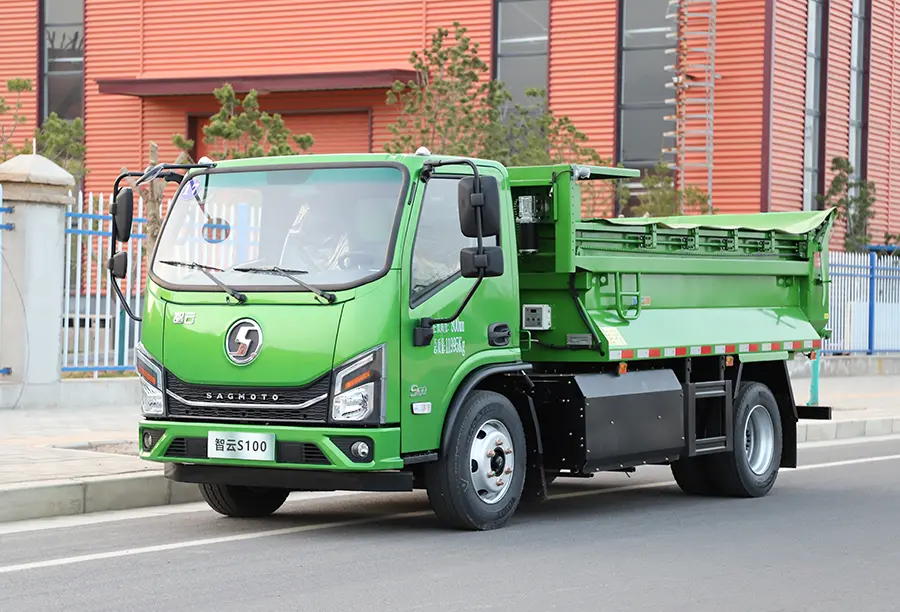
For urban logistics—last-mile delivery, express courier, supermarket distribution—the SHACMAN i9 Electric Light Truck is the entry point. It is a purpose-built EV light truck with a gross vehicle weight of 8 tonnes or less and rated load capacity up to 4 tonnes.
| Parameter | i9 Electric Light Truck |
| GVW | ≤ 8 T |
| Battery | 100 kWh LFP |
| Wheelbase | 3,360 mm (options to 4,200 mm) |
| Cargo box (van) | 4,200 × 2,100 × 2,100 mm |
| Max speed (loaded, 6 t) | > 100 km/h |
| Max gradient (loaded, 6 t) | ≥ 20% |
| Interior noise | As low as 50.1 dB |
| Energy cost vs diesel | Over 40% lower daily energy cost |
The i9’s 100 kWh battery and sub-8-tonne GVW put it in a different regulatory and pricing class from the heavy tractors, which is the point: for urban delivery, the 40%+ energy cost reduction is what makes the electric business case work at the light end.
Product page: SHACMAN i9 Electric Light Truck
Three lessons transfer directly to export procurement:
The vehicle is only half the purchase. China’s electric truck adoption accelerated when swap networks and charging infrastructure caught up with the vehicles. An electric truck without a guaranteed energy supply is a diesel truck with extra downtime. SHACMAN’s export model supports charging and swapping configurations; confirm what is included in your quotation before comparing prices.
Battery cycle life matters more than capacity. A 600 kWh pack with short cycle life is more expensive per delivered kilometre than a 350 kWh pack rated for 8,000+ cycles. Ask for cycle life data, not just kWh.
Payload efficiency is a hidden cost. Every kilogram of battery weight that does not generate revenue is a kilogram of cargo not moved. The M5000E’s 400 kg weight advantage is a direct economic benefit on routes where payload is maximised.
For a full overview of SHACMAN’s new energy range, including dump, tractor, light, cargo, and special truck variants, the product hub is the place to start:
https://www.shacman-group.com/shacman-trucks/shacman-new-energy/
China’s electric truck market did not grow because the technology was perfect. It grew because the operating economics became undeniable in specific, well-defined duty cycles—and because the infrastructure caught up fast enough to remove the excuses. For buyers outside China, the same logic applies. The question is not whether to electrify; it is which route, which platform, and which energy package makes the numbers work.

Copyright @2023 Shacman. All Rights Reserved. Privacy Policy.